
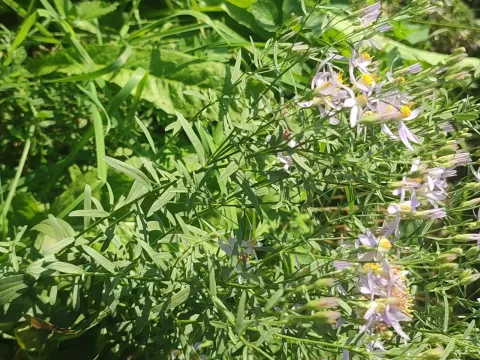
Galatella dracunculoides
Galatella dracunculoides
Galatella dracunculoides, commonly known as a type of saltwort aster, is a perennial herbaceous plant from the Asteraceae family. Its distinct appearance, characterized by narrow, aromatic-like leaves, makes it a unique botanical subject in field studies and sustainable agriculture.
What the section contains
Galatella dracunculoides
Originating from the Eurasian steppes, this species is well-adapted to harsh continental climates. Its natural habitat includes rocky slopes and salt-affected terrains, which signifies its resilience and ability to thrive in challenging soil environments.
Regarding climate, the plant requires full sun exposure to maintain optimal vigor and floral production. It possesses an inherent tolerance to drought, making it an excellent candidate for cultivation in arid or semi-arid regions where water management is a primary constraint.
Soil requirements are relatively flexible; the plant prefers well-drained substrates and demonstrates a notable tolerance for saline conditions. It is particularly valued in soil conservation programs due to its extensive root system that effectively prevents erosion on slopes.
Agricultural management is primarily focused on the establishment phase. Once the root system is fully developed, the crop exhibits high competitiveness against weeds, reducing the need for constant maintenance and intervention in large-scale planting environments.
The species exhibits robust health and high natural resistance to common agricultural pathogens. Consequently, the reliance on synthetic fungicides is minimal, supporting its suitability for integrated and low-input farming systems globally.
Potential threats include moisture-related stress if soil drainage is inadequate, which may lead to root rot. While pests like aphids might occasionally visit the foliage, they rarely reach levels requiring intervention, as the plant's natural defenses are generally sufficient for long-term health.