
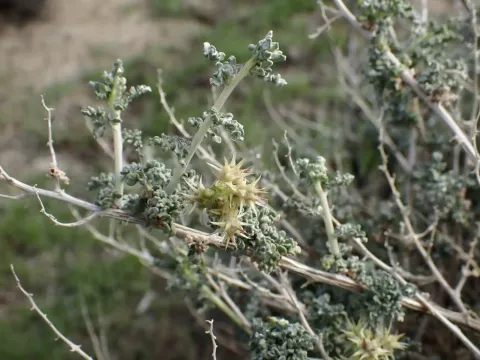
Burrobush
Ambrosia dumosa
Burrobush (Ambrosia dumosa) is a perennial shrub belonging to the Asteraceae family. It is widely recognized as a dominant species in the arid desert landscapes of the southwestern United States and Mexico.
What the section contains
Burrobush
This plant is a true xerophyte, having evolved specific physiological adaptations to thrive in regions with extremely low annual precipitation and high heat levels.
It typically inhabits well-drained, sandy or rocky soils where it can establish a deep root system to access residual moisture located far beneath the desert surface.
The environmental requirements include high solar intensity and extended daylight hours, which are essential for its metabolic processes during the hot growing season.
While not a traditional agricultural crop, its ecological presence is vital for soil stabilization and as a primary source of habitat for various desert fauna.
Natural threats to the Burrobush include various desert-dwelling insects that feed on its leaves and stems, occasionally resulting in significant defoliation during drought periods.
Pathogenic fungi are generally not a major concern in its native desert environment, but they may become an issue if micro-climatic conditions become unusually humid.
Competition from invasive plant species poses a modern threat to its population density, as these invaders often outcompete the shrub for limited water resources.
Land development and off-road vehicle activity are the primary man-made threats that physically destroy the root systems and limit the natural expansion of its colonies.
Climate change, specifically the shifting patterns of rainfall, remains a long-term threat to the stability of the populations in its traditional Mojave habitat.