
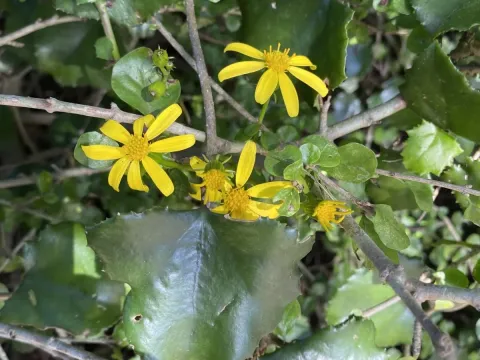
Bryony-leaved ragwort
Senecio bryoniifolius
Senecio bryoniifolius, commonly known as bryony-leaved ragwort, is a herbaceous perennial belonging to the extensive Asteraceae family. Originating from the coastal regions of Chile, this plant is well-adapted to maritime climates that feature mild temperatures and relatively high humidity throughout the growing season.
What the section contains
Bryony-leaved ragwort
The plant thrives in well-drained, fertile soils with a neutral pH profile. Soil texture is of paramount importance; compacted or heavy clay soils that retain excessive moisture can lead to root rot. Gardeners and growers often amend the soil with perlite or organic matter to ensure porosity.
Regarding climate, this species prefers temperate conditions. It is not particularly frost-hardy in harsh winter zones, making it a candidate for greenhouse cultivation or container gardening in colder regions. The ideal temperature range for vegetative development lies between 18°C and 24°C.
Exposure to light should be bright but indirect. In its native habitat, it receives coastal sunlight which is often filtered by marine mist. High-intensity, direct mid-day sun can stress the foliage, leading to scorch marks; therefore, partial shade during the peak summer hours is recommended.
Watering practices must be disciplined. The root zone requires consistent moisture, but the substrate must be allowed to dry slightly between irrigation cycles. This balance prevents the physiological stress associated with waterlogging while ensuring the plant has enough energy for structural growth.
Root rot, primarily caused by Pythium and Phytophthora species, remains the most significant threat to Senecio bryoniifolius. Overwatering is the most frequent cause of these pathogens, and once the root system is compromised, the prognosis for the plant is usually poor.
Aphids and spider mites are the most common pests observed on this species. These insects tend to colonize the underside of leaves and young stems, extracting sap and causing chlorosis, stunted growth, and a general decline in the plant's aesthetic value and overall vigor.
Management of pest populations should prioritize integrated pest management (IPM). Periodic manual inspection is essential, followed by the use of horticultural soaps or neem oil, which are generally safe for the plant and effective against small-scale outbreaks of soft-bodied insects.
Fungal diseases, such as powdery mildew, often occur when the foliage remains wet for prolonged periods or when plant density is too high. Improving airflow and spacing plants appropriately allows for quicker drying of the leaf surface, which is a critical deterrent for fungal spores.
To enhance the plant's natural resilience, a balanced fertilization program should be implemented. Avoiding excessive nitrogen is crucial, as rapid, soft growth is more attractive to pests and more susceptible to infection, while balanced potassium and phosphorus levels support stronger cellular structure.