


Reference · Crops
Burdock
Arctium
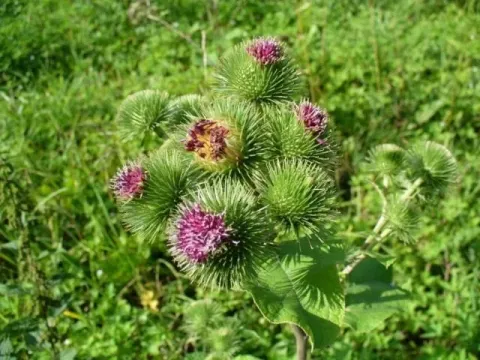
Burdock belongs to the Asteraceae family and is commonly grown as a biennial root crop for pharmaceutical and culinary purposes.
1
items
What the section contains
Marketplace
Products in this section · 1
Burdock
Sowing is typically performed either in late autumn or early spring, once the soil has warmed up to at least 5-8 degrees Celsius.
Seeds should be sown in rows spaced approximately 60 cm apart, with a planting depth of 2-3 cm to ensure uniform germination.
Since the initial growth stage is slow, maintaining consistent soil moisture is crucial for the successful establishment of seedlings.
Thinning is necessary once the plants develop their second or third true leaf, ensuring a final spacing of 25-30 cm between individual plants.
The crop thrives in deep, fertile, and well-drained loamy or sandy soils, which allow the taproot to develop without deformation.
Burdock is relatively hardy and adapted to various climates, preferring full sun exposure to maximize root biomass and active ingredient accumulation.
It is sensitive to waterlogging, so fields with poor drainage or high water tables should be avoided to prevent root rotting.
Soil preparation should involve deep ploughing and the incorporation of organic matter, which enhances soil structure and nutritional availability.
Proper field maintenance includes regular weeding, as burdock is susceptible to competition from fast-growing weeds in the early stages.
Burdock is primarily cultivated for its roots, which are rich in inulin, essential oils, and various bioactive compounds.
Commercial utilization spans the pharmaceutical, cosmetic, and food industries, making it a potentially profitable niche crop.
Average yields reach 15-25 tons per hectare, depending heavily on soil quality, fertilizer application, and local climatic conditions.
The leaves and seeds also have secondary applications, though the root remains the most valuable product in the international market.
Consistent yield levels are achieved through intensive care and appropriate harvesting logistics during the late autumn harvest season.
Powdery mildew is the most common fungal disease, often triggered by high humidity, poor air circulation, and extreme heat during the summer.
Root rot occurs if the soil remains excessively saturated, leading to significant losses and degradation of the root quality.
Insect pests, including aphids and various leaf beetles, may feed on the foliage, impacting the plant's overall photosynthetic capacity.
Integrated pest management strategies are advised, focusing on crop rotation and mechanical control rather than heavy chemical usage.
Keeping the plantation free of weeds helps reduce the incidence of disease and provides better airflow throughout the field.
Harvesting for root production is best conducted in the autumn of the first year before the ground freezes, when root nutrients are highest.
Mechanical harvesters or specialized deep-digging tools are used to extract the roots, which can grow quite deep depending on soil type.
Post-harvest processing involves washing the roots, trimming secondary rootlets, and drying them at low temperatures to retain quality.
If cultivated for seed, the plant is harvested in its second year after the flowering heads reach maturity and start to turn brown.
Proper storage in dry, cool, and well-ventilated conditions is essential for maintaining the integrity of the dried herbal material.