
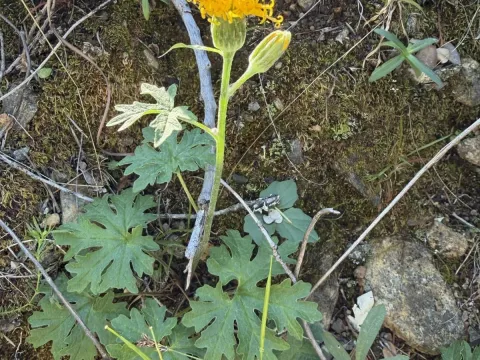
Cacaliopsis
Cacaliopsis
Cacaliopsis (Cacaliopsis nardosmia) is a perennial herbaceous plant belonging to the Asteraceae family. Understanding its reproductive cycle is essential for successful cultivation in both garden and semi-agricultural settings.
What the section contains

Cacaliopsis
The propagation of this species is primarily achieved through seed sowing, which requires a period of cold stratification to break dormancy. Sowing in late autumn allows the seeds to undergo this process naturally.
Indoor propagation is possible by placing seeds in a cold environment (e.g., a refrigerator) for several weeks before sowing in moist, well-draining soil media in late winter.
Once seedlings have developed two sets of true leaves, they should be transplanted into individual containers. This prevents root competition and ensures a robust root system before the final planting in the soil.
Acclimatization of young plants to outdoor conditions should be gradual, exposing them to partial shade and moderate temperatures to prevent transplant shock.
Cacaliopsis thrives in rich, loose, and well-draining soil. It is highly sensitive to waterlogging, which often leads to root decay, necessitating a site with excellent drainage properties.
This plant prefers a sheltered location with partial shade, mimicking its natural woodland habitat. Excessive direct sunlight can scorch the leaves and stunt the development of the plant during the summer heat.
Regular but controlled irrigation is crucial, particularly during the active growing season. The soil should remain consistently moist but never water-saturated to ensure healthy growth.
The optimal pH range for this species is slightly acidic to neutral. Periodic soil testing and the addition of organic matter, such as compost or leaf mold, can help maintain soil structure and nutrient levels.
Spacing is a vital consideration for disease prevention. Providing adequate airflow between plants helps reduce the likelihood of fungal infections and creates a healthier microclimate.
Fungal diseases, specifically powdery mildew, are common threats during periods of high humidity and poor ventilation. Regular monitoring and the application of appropriate fungicides can effectively manage these issues.
Root rot is the most serious threat to the plant's long-term survival. It is typically caused by over-irrigation or inadequate drainage, requiring immediate correction of the moisture regime.
Gastropod pests, such as slugs and snails, are particularly troublesome in the early spring, as they consume the tender new foliage of young plants. Barrier methods and targeted baiting are recommended strategies.
Aphid infestations may occur on buds, causing stunted growth and deformity of the inflorescences. Biological or chemical control measures should be applied as soon as the first signs of infestation are noted.
Overall, maintaining plant hygiene by removing dead or diseased foliage at the end of the season significantly reduces the risk of pest and disease recurrence in the following year.