
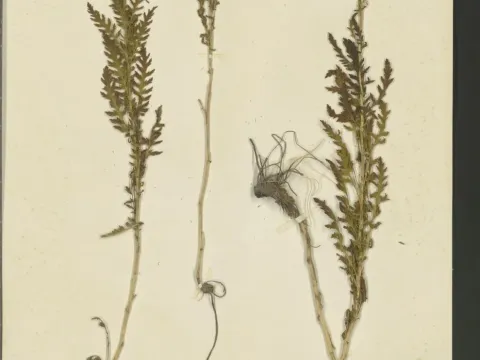
Achillea thracica
Achillea thracica
Sowing of Achillea thracica is ideally performed in early spring or late autumn, following the natural biological rhythm of this resilient medicinal perennial.
What the section contains
Achillea thracica
The seeds are sown in rows spaced 45–60 cm apart, allowing sufficient room for mechanical cultivation and proper air circulation between plant rows.
Due to the small size of the seeds, they should be placed at a depth of no more than 1 cm to ensure optimal germination rates and minimize seedling stress.
In large-scale operations, precision seed drills are used to maintain uniform plant distribution, which is essential for consistent development and crop uniformity.
Field preparation must include fine tillage to ensure the soil surface is even, providing the necessary contact between the seed and the moist soil particles.
Achillea thracica is a member of the Asteraceae family, well-adapted to varied environmental conditions and known for its high drought resistance capabilities.
It performs optimally in full sunlight exposure, which is critical for maximizing the synthesis of essential oils and other secondary metabolites in the plant tissue.
The crop requires well-drained soils, ideally of a sandy or loamy texture, as the roots are highly susceptible to rot under conditions of prolonged waterlogging.
Soil pH should remain in the neutral to slightly alkaline range to facilitate the efficient uptake of soil nutrients throughout the vegetative growth stage.
Agricultural management includes seasonal weeding and soil aeration, which help in maintaining plant vigor during the crucial mid-summer growth period.
The plant is occasionally prone to powdery mildew, particularly in environments with high humidity and poor airflow, which requires careful canopy management.
Integrated pest management strategies should focus on preventing aphid infestations that can damage the delicate flowering heads during the budding stage.
Proper crop rotation practices, moving the cultivation site every few years, effectively minimize the risk of soil-borne pathogens infecting the plantation.
When necessary, biocontrol agents are preferred over synthetic pesticides to protect the local ecosystem and maintain the organic quality of the medicinal output.
Regular scouting of the fields during the growing season allows for early intervention, ensuring that the crop remains healthy until the scheduled harvest time.
The harvest occurs at the peak of flowering, a stage characterized by fully open flower heads containing the highest concentration of active biochemical compounds.
Mechanized harvesting equipment is typically calibrated to prune the upper portion of the stems, ensuring minimal loss of leaf and flower material during the process.
Immediate post-harvest processing is required, involving transport to clean, dry facilities to prevent unwanted heating and potential spoilage of the biomass.
Drying is performed using specialized chambers with precise thermal control to preserve the aromatic profile and the efficacy of the botanical ingredients.
Once dried to the required moisture level, the raw material is packaged in moisture-proof containers to maintain its quality for long-term pharmaceutical usage.