
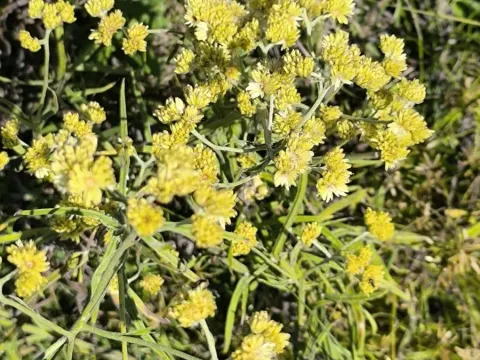
Achyrocline
Achyrocline (Less.) DC.
Achyrocline is a genus of perennial herbs and shrubs belonging to the Asteraceae family. These plants are native to South America and are well-adapted to diverse ecological niches.
What the section contains

Achyrocline
The plant thrives in full sun and requires well-drained, sandy or loamy soils. It is notably drought-tolerant, making it suitable for regions with limited rainfall.
Proper soil aeration is crucial for the healthy development of Achyrocline. Waterlogging must be avoided at all costs, as the roots are highly susceptible to rot in stagnant moisture.
Temperature requirements include moderate warmth, as the plant is native to subtropical zones and is not strictly winter-hardy in colder northern latitudes.
In terms of agricultural maintenance, weeding is essential during the early stages of growth to prevent competition for light and nutrients from aggressive annual weeds.
Achyrocline is primarily cultivated for its medicinal properties, particularly for its rich content of flavonoids such as quercetin, luteolin, and apigenin.
The yield of raw material is maximized when harvesting occurs at the peak of the flowering stage, ensuring the highest concentration of essential oils and active metabolites.
Farmers often implement mechanical harvesting techniques, taking care to maintain the integrity of the flower heads where the most valuable compounds are concentrated.
Post-harvest management involves controlled drying under shade in well-ventilated facilities to prevent the oxidation of active compounds and maintain product quality.
The pharmaceutical industry utilizes the dried aerial parts of the plant for processing into antioxidants, anti-inflammatory extracts, and health supplements.
Fungal diseases, especially those affecting the root and collar zones, represent the most significant threat to Achyrocline crops during periods of high humidity.
Common pests include spider mites and aphids, which tend to infest the plant during hot and dry conditions, potentially affecting the quality of the raw material.
To mitigate the risk of pest and disease outbreaks, growers should adhere to rigorous crop rotation schedules and ensure adequate spacing between plants for airflow.
Integrated pest management (IPM) is recommended, focusing on biological controls rather than harsh chemical pesticides, to meet the requirements of the medicinal herb market.
Regular monitoring of the plantation is vital, as early detection of fungal patches or insect colonies can prevent significant yield losses across the field.