
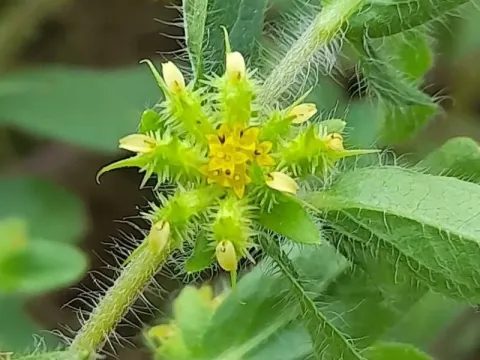
Acanthospermum humile
Acanthospermum humile
Acanthospermum humile is a herbaceous plant belonging to the Asteraceae family. In an agricultural context, it is predominantly recognized as a persistent weed rather than an intentional crop.
What the section contains
Acanthospermum humile
The plant's lifecycle begins with seed germination, which is highly sensitive to soil temperature and moisture levels. In most regions, peak germination occurs when soil temperatures reach 15-18 degrees Celsius.
The seeds of this species possess high dormancy levels, allowing them to form a long-lasting seed bank in the soil. This biological strategy ensures the weed's survival through unfavorable seasons or years.
The plant demonstrates significant regenerative potential if the stem is cut without damaging the root system. Consequently, shallow tillage is often insufficient for complete control of established specimens.
The most effective strategy involves pre-sowing cultivation to stimulate germination, followed by the destruction of seedlings using herbicides or mechanical methods before planting the main crop.
This species thrives in open, sun-exposed areas with well-drained, light-textured soils. It is highly adaptable and can colonize abandoned farmland or neglected crop borders with ease.
Acanthospermum humile exhibits remarkable drought tolerance, supported by a deep root system that accesses moisture from deeper soil layers. This gives it a competitive edge over many shallow-rooted crops.
While the plant prefers neutral to slightly acidic soils with high fertility, it is capable of surviving on degraded land. Its ability to tolerate low-nutrient substrates contributes to its classification as a invasive weed.
Crop rotation is a vital tool for managing this species. Planting competitive, high-density crops creates shade that significantly limits the development of A. humile, effectively suppressing its growth.
Chemical control remains the most consistent method for large-scale operations. Applying selective herbicides at the seedling stage is crucial for reducing the weed population before it reaches the flowering phase.
Acanthospermum humile is susceptible to various fungal pathogens typical of the Asteraceae family, including downy mildew and rust diseases that can impact its vegetative vigor.
Insect pests, such as leaf miners and certain aphid species, frequently utilize the plant as a host. However, these pests are rarely sufficient to cause significant mortality in well-established colonies.
The primary agricultural threat is the plant's high seed production. The fruits are equipped with hooks that attach easily to animal fur, human clothing, and agricultural machinery, ensuring rapid spread.
Contamination of harvested grain with these prickly fruits reduces the commercial value of the crop. Cleaning machinery and sorting grain are labor-intensive tasks required after harvesting infested areas.
An integrated pest management approach is essential, emphasizing the thorough cleaning of harvest equipment. This practice prevents the mechanical transfer of seeds to uninfested fields, maintaining crop purity.