
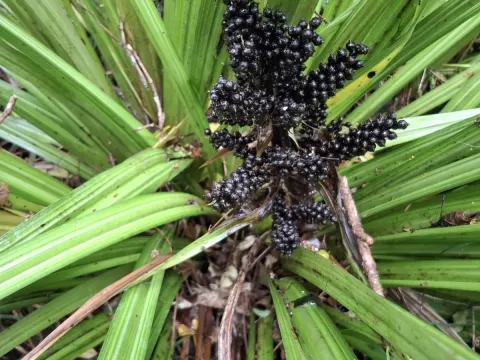
Astelia
Astelia Banks & Sol. ex R. Br.
Astelia (Astelia Banks & Sol. ex R. Br.) is a genus of perennial herbaceous plants belonging to the Asteliaceae family. These plants are native to the Southern Hemisphere, with a significant concentration of species found in New Zealand, Australia, and various islands across the Pacific Ocean.
What the section contains
 Astelia
 chathamica x Astelia nervosa
Astelia fragrans
Astelia fragans
Astelia
Astelia chathamica x Astelia nervosa
Astelia fragrans
Astelia fragans
 Astelia graminea
Astelia graminea
Astelia graminea
 Astelia grandis
Astelia grandis
Astelia grandis
 Astelia linearis
Astelia linearis
Astelia linearis
 Astelia nervosa
Astelia nervosa
Astelia nervosa
 Astelia nervosa x Astelia nivicola
Astelia nervosa x Astelia nivicola
Astelia nervosa x Astelia nivicola
 Astelia nivicola
Astelia nivicola
Astelia nivicola
 Astelia petriei
Astelia petriei
Astelia petriei
 Astelia skottsbergii
Astelia skottsbergii
Astelia skottsbergii
 Astelia solandri
Astelia solandri
Astelia solandri
 Astelia subulata
Astelia subulata
Astelia subulata
 Astelia trinervia
Astelia trinervia
Astelia trinervia
 Chatham Island astelia
Astelia chathamica
Chatham Island astelia
Astelia chathamica
 Shore Astelia
Astelia banksii
Shore Astelia
Astelia banksii
Astelia
Botanically, Astelia is distinguished by its basal rosettes of long, sword-shaped leaves, often characterized by a metallic or silvery appearance due to fine, scale-like hairs. Many species are known for their semi-epiphytic nature, often growing in forks of trees or in damp, mossy ground within forest habitats.
In terms of climate requirements, Astelia prefers cool to moderate temperatures and high humidity. It thrives in locations with dappled shade or bright, indirect light, as harsh direct sun can easily damage the delicate foliage and lead to dehydration of the leaf tissues.
The soil for this crop must be light, porous, and nutrient-rich, mimicking the organic-heavy debris found on forest floors. A mix of peat, bark, and perlite is often recommended to ensure optimal aeration of the roots while maintaining consistent moisture levels without waterlogging.
The primary use of Astelia is horticultural, where it is highly valued for its striking architectural foliage. It is frequently employed as an ornamental feature in subtropical gardens, conservatory displays, or as a sophisticated houseplant in temperate regions where outdoor wintering is not possible.
The most significant threat to Astelia is the development of root rot, caused primarily by poor drainage and excessive moisture retention in the soil. To prevent this, planters should always use containers with adequate drainage holes and allow the top layer of substrate to dry slightly between waterings.
Pests such as spider mites and scale insects are common in domestic environments, especially during winter when heating systems lower the ambient humidity. Regular monitoring, along with periodic leaf cleaning and occasional misting, acts as an effective preventive measure against these intruders.