
Shore Astelia
Astelia banksii
Description
Growing requirements
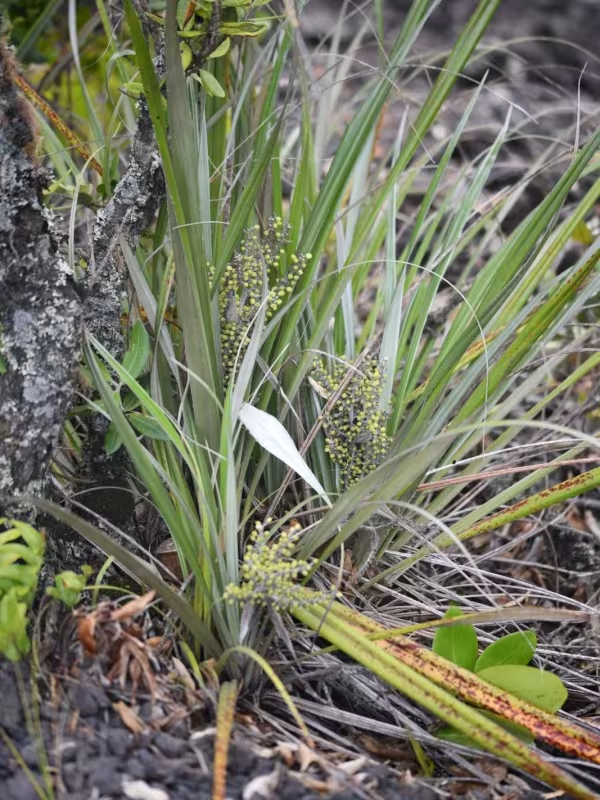
Shore Astelia, scientifically known as Astelia banksii, is a striking evergreen perennial belonging to the Asteliaceae family. It is native to the coastal regions of New Zealand, where it is found in rocky crevices and coastal forest undergrowth.
The plant is distinguished by its long, arching, silvery-green leaves that form large, dense clumps. These rosettes can grow up to a meter in height, providing a dramatic textural effect that makes it a popular choice for modern garden designs.
To thrive, Shore Astelia requires well-draining, humus-rich soil that mimics its natural habitat. It prefers areas with consistent moisture, though it is remarkably tolerant of wind and salt-laden air characteristic of coastal environments.
Climate-wise, the plant is best suited for temperate conditions. It does not tolerate extreme frost and performs best in sheltered locations where it can be protected from deep freezes and harsh winter conditions.
Its primary use is ornamental landscaping, where it serves as a focal point or a filler in shaded borders. It is also highly effective when used in container gardening for patios or as a feature plant in contemporary coastal-style gardens.
Main diseases and pests
The most significant threat to the health of Astelia banksii is root rot, typically caused by poor drainage or overly compacted soil. Ensuring an airy and permeable substrate is crucial for preventing these lethal infections.
Scale insects and mealybugs are the most common pests affecting this species. These pests often congregate at the base of the leaves, requiring careful monitoring and the application of appropriate systemic insecticides to manage infestations.
In drier environments, spider mites can become an issue, particularly when the humidity is too low. Regular misting and maintaining adequate airflow around the plant help to mitigate the risk of these pests.
Fungal leaf spot can develop if moisture remains trapped in the center of the leaf rosettes. Promoting better air circulation and avoiding overhead watering are simple yet effective methods for preventing such fungal issues.
General maintenance, such as grooming the plant by removing old or damaged foliage, plays a major role in overall plant health. Proper sanitation prevents the buildup of debris where moisture can accumulate and provide a breeding ground for pests.