
Astelia trinervia
Astelia trinervia
Description
Growing requirements
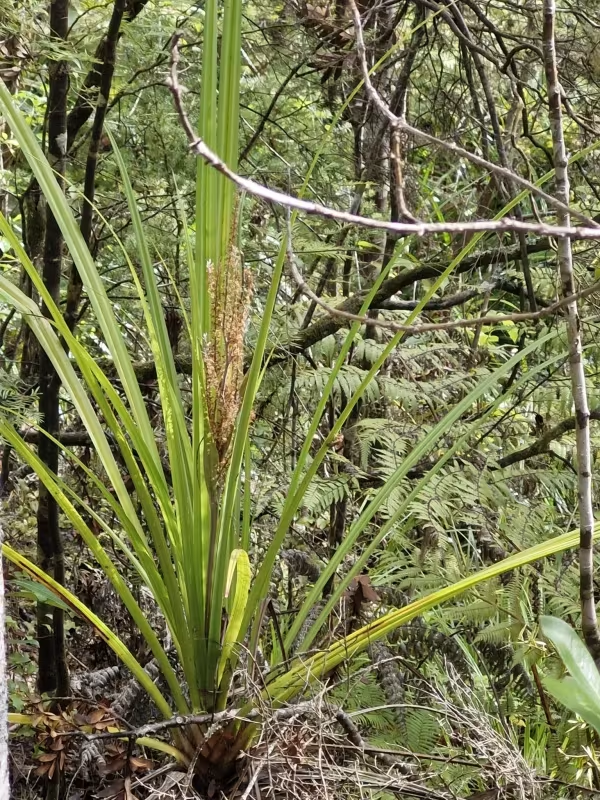
Astelia trinervia is a perennial herbaceous plant belonging to the Asteliaceae family. Native to the forests of New Zealand, it often thrives as an epiphyte or terrestrial plant, characterized by its distinct, robust foliage with three prominent longitudinal veins.
The plant grows in a dense, tufted rosette form, which is an evolutionary adaptation for capturing moisture and organic debris. These nutrients are absorbed directly through the base of the leaves, supporting the plant in its natural canopy or understory environment.
Regarding climate requirements, this species favors temperate regions with high humidity and stable, cool conditions. It does not tolerate extreme heat or frost, making greenhouse or indoor cultivation the most viable option in non-native geographic zones.
The soil substrate must be highly breathable and rich in acidic organic matter. Growers should utilize mixtures consisting of pine bark, peat moss, and perlite to ensure optimal drainage and prevent the roots from becoming waterlogged.
Effective agrotechnics involve regular misting to maintain atmospheric humidity and consistent, moderate watering. Providing bright, indirect sunlight is essential for maintaining the structural integrity and deep coloration of the foliage throughout the growing season.
Main diseases and pests
Fungal pathogens represent the primary threat to Astelia trinervia, particularly those causing root rot and leaf base decay. Preventing moisture accumulation within the central rosette is the most effective management strategy for these diseases.
Common horticultural pests, such as scale insects and mealybugs, are frequently observed in controlled environments. Implementing a rigorous inspection schedule and applying appropriate systemic insecticides can prevent these infestations from damaging the plant's aesthetic quality.