
Chatham Island astelia
Astelia chathamica
Description
Growing requirements
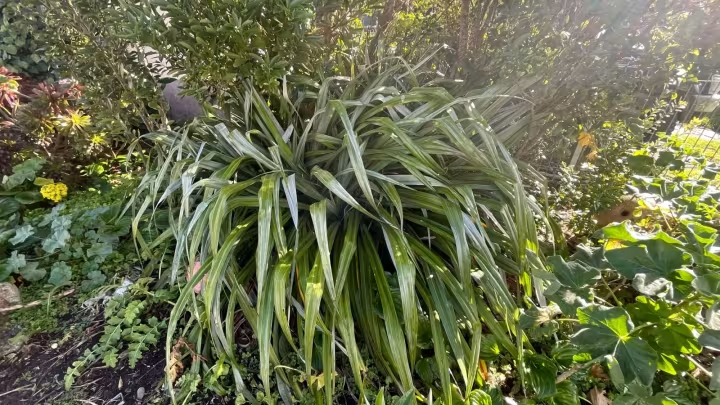
Chatham Island astelia (Astelia chathamica) is a striking perennial herb belonging to the Asteliaceae family. Native to the Chatham Islands of New Zealand, this plant has gained popularity worldwide as a highly sought-after ornamental species for landscaping.
The plant is distinguished by its large, arching, sword-shaped leaves with a beautiful silvery-metallic sheen. These leaves grow in a basal rosette, creating a dense, architectural structure that can reach over a meter in height and diameter, making it a focal point in any garden.
For optimal growth, Astelia chathamica requires a climate that mimics its oceanic home, characterized by high humidity and moderate temperatures. While it can handle light frost, it thrives best in sheltered positions protected from harsh, drying winds and direct, intense summer sun.
The soil requirements are specific: the medium must be rich in organic matter, slightly acidic, and, most importantly, exceptionally well-draining. Cultivators often mix coarse sand or bark chips into the soil to ensure that water does not accumulate around the roots.
In terms of usage, it is primarily an ornamental crop. It is highly effective when planted in large containers, used for rockery design, or placed as a solitary specimen in shaded borders where its silvery foliage can provide a strong contrast against darker green backgrounds.
Main diseases and pests
Root rot is the most significant threat to the health of Astelia chathamica. This fungal condition is almost exclusively caused by overwatering or soil that remains saturated for extended periods, leading to the rapid decay of the root system.
Leaf spot diseases can occur if air circulation is poor, particularly in nursery or greenhouse environments. Keeping the foliage dry during irrigation and ensuring good spacing between plants are effective preventive measures.
Scale insects and mealybugs are the most common pests found on this plant. They tend to hide in the tight crevices where the leaf bases meet the center of the rosette, making them difficult to detect until the infestation becomes advanced.
Spider mites can also be problematic, especially in indoor settings or during hot, dry summer months. They feed on the underside of the leaves, causing stippling and eventual yellowing of the otherwise resilient foliage.
Management of these pests involves a combination of manual removal, if the infestation is light, or the application of horticultural oils. Regular maintenance and consistent environmental monitoring are key to keeping the plants healthy.