
Astelia graminea
Astelia graminea
Description
Growing requirements
Astelia graminea is a perennial herbaceous plant belonging to the Asteliaceae family. Native to the high-altitude regions of New Guinea, it is well-adapted to cool, misty environments, making it a specialized ornamental choice for specific garden climates or conservatory collections.
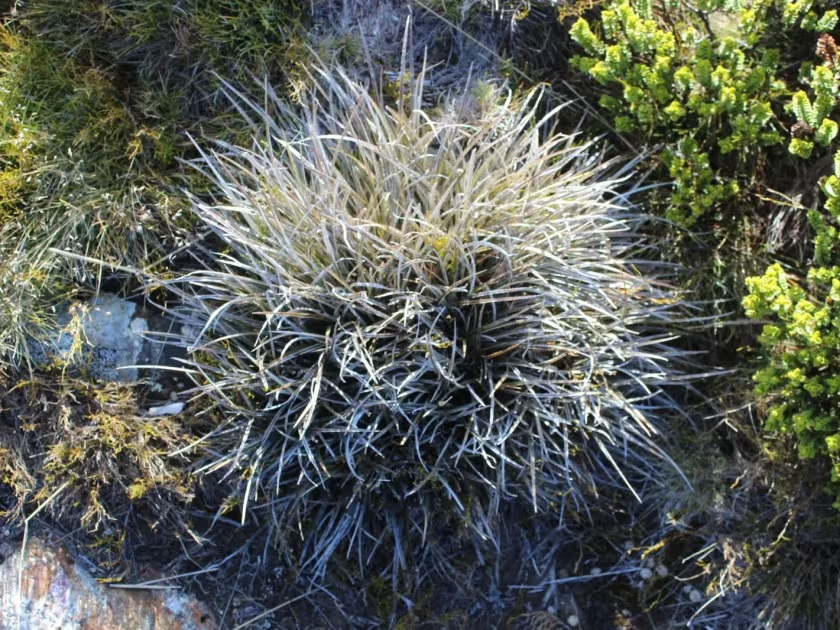
The plant features distinct grass-like leaves arranged in a dense basal rosette. These leaves often exhibit a silvery-green sheen, which adds structural elegance and visual interest to landscape designs, particularly in shade-loving plant groupings or alpine-style containers.
Optimal growth requires a cool climate with high ambient humidity. Unlike typical grasses, this species struggles in direct, intense sunlight, which can cause leaf scorch. Providing a site with dappled shade or indirect light is essential for maintaining the health and vibrant color of the foliage.
The soil requirements are strict: the medium must be highly porous, well-draining, and rich in organic matter. A mixture of peat, bark, and perlite is often ideal for providing the necessary aeration while holding sufficient moisture to keep the roots hydrated without suffocating them.
Cultural practices should focus on maintaining constant soil moisture without saturation. In an agricultural or nursery setting, automated misting systems are beneficial to mimic the natural cloud-forest conditions of the plant's native habitat, ensuring leaf health and steady growth rates throughout the year.
Main diseases and pests
The most common threats to Astelia graminea are root and crown rots caused by phytopathogenic fungi. These typically occur when the potting medium becomes waterlogged or when air circulation around the base of the rosette is insufficient.
Pest issues are usually limited to greenhouse dwellers, such as scale insects and spider mites. Infestations are best managed through proactive monitoring and maintaining high humidity levels, which naturally discourages mite population growth on the leaf surfaces.