
Astelia solandri
Astelia solandri
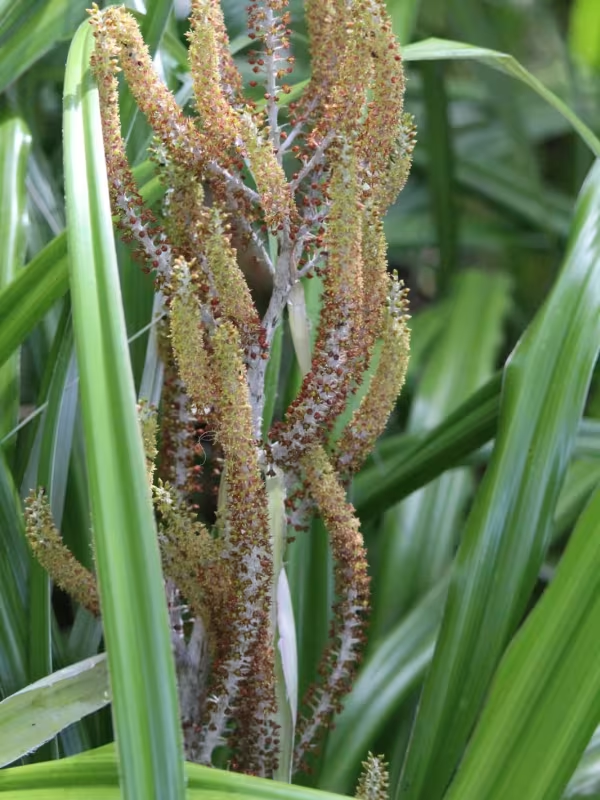
Description
Growing requirements
Astelia solandri is a striking perennial species belonging to the Asteliaceae family, native to New Zealand. In its natural environment, it commonly grows as an epiphyte, often perched on tree branches or as a lithophyte on cliff faces, where it captures organic debris to supplement its nutrient needs.
The botanical structure is defined by long, arching, strap-like leaves arranged in a dense, tufted rosette. The foliage is notable for its silvery-green appearance, caused by a layer of fine scales (trichomes) that protect the plant from high levels of solar radiation and minimize water loss during drier periods.
To cultivate Astelia solandri successfully, one must replicate its natural epiphytic habitat. This includes a high-drainage, porous substrate such as bark-based mixes or specialized epiphytic soil, ensuring that the roots are never left sitting in water, which can trigger rapid decay.
Regarding climate, this species thrives in temperate to subtropical conditions. It requires bright, indirect light to maintain its structural integrity and color. Excessive direct heat or stagnant, humid air without movement can cause significant stress to the plant and promote the growth of pathogens.
Routine care involves consistent, controlled irrigation, focusing on the root system while avoiding deep saturation of the plant's heart. Occasional fertilizing during the warmer months with diluted, balanced plant food is recommended to sustain the growth of its distinctive, metallic-toned foliage.
Main diseases and pests
The primary threats to the health of this species are root and crown rot, which are almost exclusively associated with improper watering practices. High humidity without adequate ventilation allows fungal spores to proliferate, leading to necrosis in the foliage and eventual collapse of the rosette.
Pest management is focused on controlling insects that hide within the dense crevices of the leaves, such as mealybugs and scale insects. Regular inspection of the leaf bases and the use of insecticidal soaps or horticultural oils are standard practices to keep infestations under control and ensure plant longevity.