
Aloe pirottae
Aloe pirottae
Description
Growing requirements
Aloe pirottae is a rare succulent species belonging to the Asphodelaceae family, originating from the arid regions of Ethiopia. It has evolved to thrive in harsh environments, making it a highly resilient plant under proper conditions.
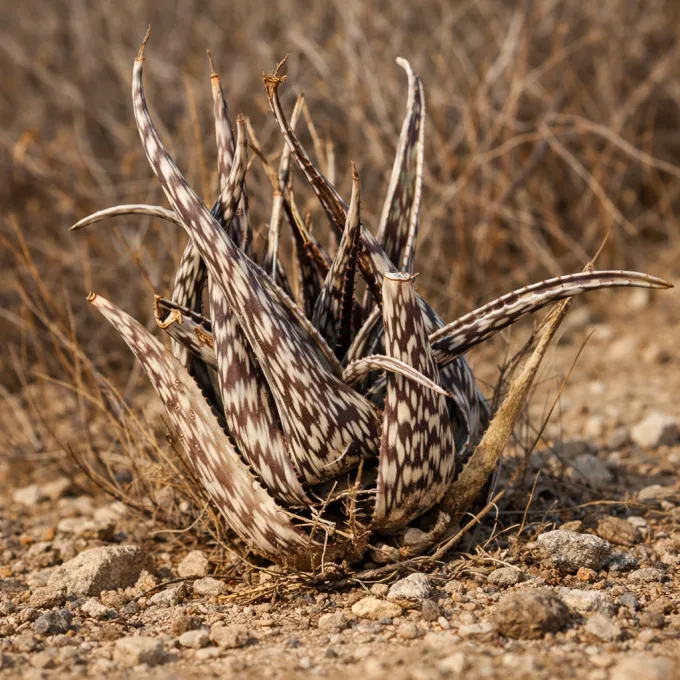
Botanically, it features a rosette structure with fleshy, lanceolate leaves adorned with marginal spines. The foliage often displays a grey-green to glaucous coloration, which serves as a protective adaptation against high solar intensity in its native habitat.
Cultivation requires abundant sunlight, as this species is heliophilic. When kept indoors or in greenhouse environments, it should be placed in the brightest spot available to maintain its compact growth form and prevent etiolation.
Soil requirements are strict: the medium must be highly porous and well-draining. A typical mix includes coarse sand, pumice, and minimal loam, preventing any accumulation of moisture that could compromise the root system.
Temperature management involves warm summers and cool, dry winters. During the dormant period, the plant requires very little to no water, mimicking the natural precipitation patterns of the Ethiopian highlands.
Main diseases and pests
The primary threat to Aloe pirottae is overwatering, which frequently leads to root and stem rot. Maintaining a dry substrate is the most effective preventative measure against fungal pathogens.
Common pests include mealybugs and spider mites. These can thrive in warm, dry environments and tend to congregate in the base of the leaves, making them difficult to detect until an infestation is well-established.
Cultural control includes ensuring proper airflow and spacing between plants to prevent the spread of humidity-related issues that weaken the plant's resistance.
If an infestation is detected, systemic insecticides should be used with caution, ensuring that any chemical application does not damage the natural waxy cuticle of the leaves.
Avoiding overhead watering is critical, as water trapped in the rosette can quickly lead to rot, especially in indoor environments with limited natural evaporation.