
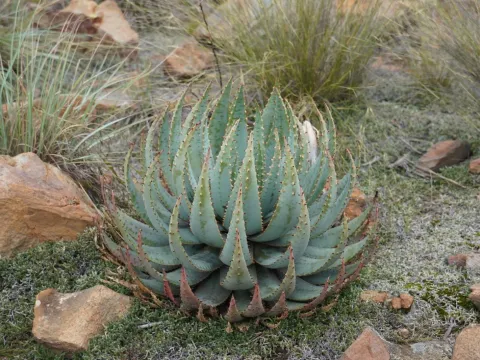
Aloe peglerae
Aloe peglerae
Aloe peglerae belongs to the Asphodelaceae family and is an endemic species native to the rocky slopes of Gauteng, South Africa. It is a slow-growing succulent that forms a small, compact, and globular rosette of stiff, incurved leaves.
What the section contains
Aloe peglerae
To cultivate this species successfully, it is essential to provide a well-draining mineral-based substrate. The potting mix should consist primarily of coarse sand, gravel, and perlite, with minimal organic matter to prevent water retention.
The species requires maximum sunlight exposure throughout the year to maintain its tight shape and healthy coloration. Inadequate light levels will cause the plant to etiolate and lose its characteristic compact structure.
Watering requirements are minimal; the substrate must be allowed to dry out completely between waterings. During the winter dormancy period, watering should be reduced to a bare minimum to prevent frost or cold-moisture damage.
Good air circulation is vital to mimic the breezy, high-altitude environment of its natural habitat. This helps prevent fungal buildup between the dense, overlapping leaves of the rosette.
The primary threat to Aloe peglerae in a controlled agricultural or domestic setting is root rot caused by stagnant water in the root zone.
Mealybugs are the most common insect pests, often hiding in the deep recesses between the leaves, making them difficult to detect until an infestation is well established.
Fungal leaf spots can occur if humidity levels are too high combined with poor ventilation, leading to unsightly blemishes and tissue breakdown.
Scale insects may also attach themselves to the leaves, weakening the plant by extracting essential sap and creating entry points for pathogens.
Monitoring the health of the plant involves checking the center of the rosette for signs of pests and ensuring the base of the plant remains dry at all times.