
Aloe pearsonii
Aloe pearsonii
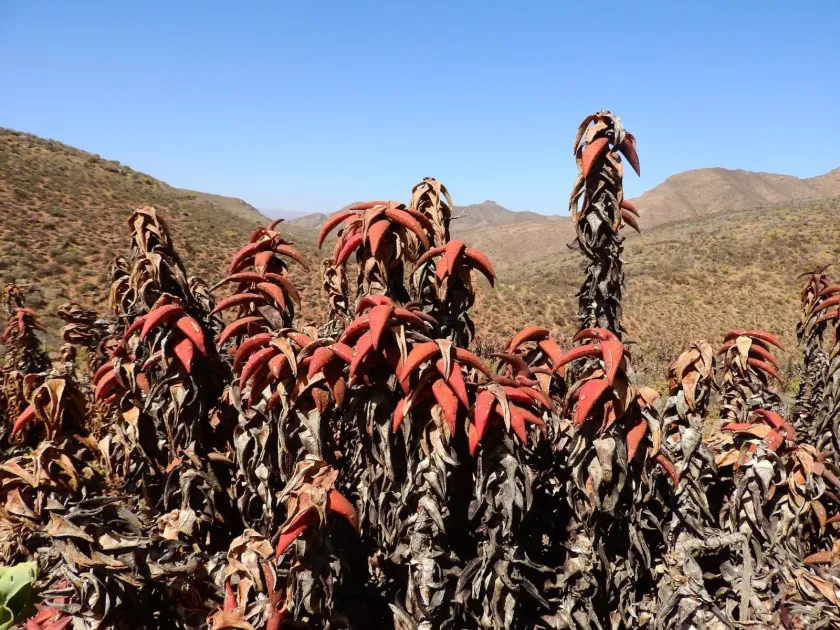
Description
Growing requirements
Aloe pearsonii is a rare member of the Asphodelaceae family, naturally occurring in the rugged, rocky terrain of Namibia and South Africa. This plant typically grows as a bush-like succulent, producing dense, stacked rosettes along its branching stems.
To thrive, this crop requires environmental conditions mimicking the arid climate of the Namib Desert. The plant demands a significant amount of direct sunlight; insufficient light leads to etiolation, where stems stretch excessively, and the leaves lose their vibrant coloration.
The planting medium must feature excellent drainage capabilities. A specialized cactus and succulent mix, heavily amended with coarse sand, perlite, or grit, is essential to prevent water accumulation near the root zone, which can be fatal to the specimen.
During the active growing season, temperatures between +20°C and +30°C are ideal. In winter, the plant enters a dormant phase, requiring cooler temperatures around +10°C to +12°C and minimal to no watering to preserve the integrity of the root system.
Watering should be performed with extreme caution, strictly when the substrate is completely dry. In humid environments, the plant is highly susceptible to fungal pathogens, making adequate air circulation and precise soil moisture management critical for success.
Main diseases and pests
Excessive soil moisture poses the greatest threat to Aloe pearsonii, as waterlogged conditions quickly trigger root rot and stem decay, which are often irreversible and lead to the rapid death of the plant.
Common pests include mealybugs and spider mites. These insects feed on the sap within the leaves, causing disfiguring spots and deformation of the rosettes, which significantly weakens the plant's natural defense mechanisms.
Scale insects may also attach themselves to the stems and leaf bases. While systemic insecticides are effective for control, oil-based treatments should be avoided, as they can damage the delicate waxy cuticle that protects the succulent foliage.
Disease prevention is primarily achieved through rigorous watering discipline and maintaining a highly porous soil structure. Frequent inspection of the base of the rosettes is necessary to detect pest infestations early before they become established.
Physiological stress, such as sunburn, may occur if the plant is suddenly moved into intense light without a hardening-off period, especially after winter dormancy; therefore, light exposure should always be increased gradually.