
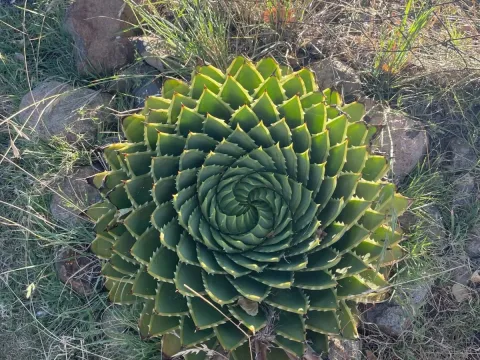
Spiral aloe
Aloe polyphylla
Aloe polyphylla is a member of the Asphodelaceae family, famous for its perfect spiral leaf arrangement that develops as the plant matures.
What the section contains
Spiral aloe
Propagation is strictly through seeds, as the species typically does not produce offsets, making it a challenge for commercial cultivation.
Seeds should be sown in a fast-draining, gritty mix and kept at moderate temperatures to ensure successful germination over several weeks.
Maintaining high hygiene standards during the sowing stage is critical to prevent damping-off disease in young seedlings.
Seedlings grow relatively slowly, and growers must avoid frequent repotting to prevent damage to the delicate developing root system.
Native to the high Drakensberg mountains of Lesotho, this plant thrives in cool, alpine environments rather than hot deserts.
The species requires excellent drainage, as it is naturally adapted to growing on steep, rocky slopes with fast-draining soil.
It prefers bright, direct sunlight but benefits from some protection against intense heat during the height of the summer.
A constant flow of fresh air is essential for the health of the rosette, as stagnant air can lead to foliage decay.
Watering requirements vary by season, with a need for consistent moisture during growth and a significant reduction in winter dormancy.
Root rot is the most significant threat to Aloe polyphylla, often caused by heavy, water-retaining soils or overwatering.
Mealybugs are the primary insect pests that tend to hide deep within the dense spiral structure of the leaves.
Fungal infections can quickly spread if the crown of the plant remains wet for too long after irrigation.
Keeping the area around the base of the plant free from debris and dead leaves is a crucial preventive measure.
Proper environmental monitoring, including humidity control, is necessary to minimize the risk of common succulent pathogens.