
Soap aloe
Aloe maculata
Soap aloe (Aloe maculata) is a perennial succulent species belonging to the Asphodelaceae family. It is native to South Africa, where it has evolved to survive in diverse rocky and arid environments.
What the section contains
Soap aloe
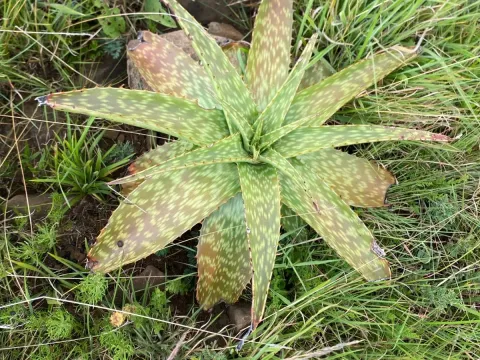
Botanically, it features a rosette of thick, spotted leaves that typically grow up to 40 centimeters in height. The foliage is characterized by white blotches and distinct marginal spines that serve as a deterrent against local herbivores.
The plant thrives in well-drained, sandy, or rocky soil types. Proper drainage is the most vital requirement for its cultivation, as the plant is highly susceptible to root rot when exposed to excessive stagnant moisture.
Climate-wise, this species prefers a sunny location with indirect but bright light. While it is drought-tolerant, it requires consistent watering during the peak growing season, provided the soil is allowed to dry out completely between sessions.
Regarding its utility, the plant is primarily used as a drought-resistant ornamental in sustainable landscaping and for industrial extractions of gel, which is utilized in high-end cosmetic and skincare products.
Root and stem rot caused by fungal infections are the most common agricultural threats, usually triggered by improper watering practices or poorly draining substrate.
Pests such as mealybugs, scale insects, and aphids are frequent challenges, as they colonize the base of the leaves and extract essential plant nutrients.
Effective management includes maintaining a dry environment around the leaf rosette and ensuring good air circulation to inhibit fungal growth.
Insecticide treatments should be applied carefully, choosing systemic options that are safe for use on succulent tissues to eliminate hidden pest colonies.
Monitoring the plant's health through regular inspection of the crown and root zone is the standard protocol for preventing large-scale infestation and structural damage.