
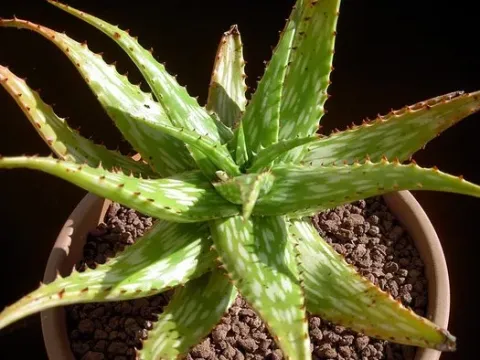
Somali aloe
Aloe somaliensis
Somali aloe (Aloe somaliensis) is a perennial succulent plant belonging to the Asphodelaceae family. It is recognized by its distinctive rosette of fleshy leaves adorned with white or pale spots.
What the section contains
Somali aloe
Originating from the arid regions of Somalia, this species is well-adapted to rocky habitats and low rainfall. It thrives in environments where drainage is excellent and moisture retention is minimal.
In terms of cultivation, it requires a porous, sandy potting mix designed for succulents. The pot must have drainage holes to ensure that water never stagnates around the roots.
The plant demands high light intensity to maintain its characteristic pattern and compact growth form. If kept in shade, the leaves tend to become elongated and lose their color intensity.
Temperature management is critical: the plant performs best in warm conditions but requires a distinct cooler, dry period during the winter months to encourage potential blooming.
The primary threat to Aloe somaliensis is root rot, which is caused by overwatering or poorly draining soil. When the substrate remains wet, the roots lose their capacity for gas exchange.
Mealybugs are a frequent pest that hides in the crevices between leaves. Their presence is often indicated by a white, cottony substance appearing on the plant surface.
Spider mites are another common challenge, especially in low-humidity environments. They cause stippling and disfigurement of the leaves by feeding on the plant tissue.
Fungal leaf spot diseases may occur if water is allowed to pool in the leaf axils. Ensuring good air circulation is essential for preventing the development of these pathogens.
Proper pest management involves regular inspections and the application of systemic or contact insecticides when an infestation is detected at an early stage.