
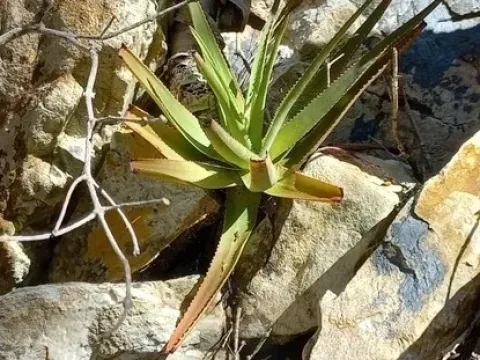
Socotrine aloe
Aloe succotrina
Socotrine aloe (Aloe succotrina) is a perennial succulent belonging to the Asphodelaceae family. Native to the island of Socotra, this plant is well-adapted to arid environments, featuring a woody stem and a dense rosette of sword-shaped leaves covered with a waxy cuticle to prevent excessive transpiration.
What the section contains
Socotrine aloe
The crop requires full sun exposure and well-ventilated conditions to maintain its structural integrity and health. In terms of climate, it thrives in warm temperatures and is highly sensitive to frost and cold humidity. Providing a dry, stable environment is essential for preventing physiological stress during the dormant season.
Soil requirements for Aloe succotrina center on drainage. A porous, sandy, or stony substrate is mandatory to prevent root rot. It is recommended to use a specialized succulent mix with high levels of inorganic matter to ensure that water passes through the pot or planting hole quickly without remaining stagnant.
Irrigation practices must be precise; the plant should only be watered when the soil medium has completely dried out. During the winter, the watering frequency should be significantly reduced to mimic the plant's natural dormant period. Overwatering is the most common cause of crop failure for this species.
Commercially, the plant is primarily cultivated for its medicinal sap. The gel and latex derived from the leaves contain bioactive compounds used in dermatology and traditional pharmacy for treating skin abrasions and inflammation. Additionally, it serves as a high-value ornamental plant for collectors and botanical gardens.
The main threats to crop health are fungal pathogens, specifically root rot (Phytophthora spp.) and leaf spot diseases. These are typically secondary to poor cultural practices, such as excessive water retention in the potting mix or high humidity levels coupled with poor air circulation.
Common insect pests include mealybugs and spider mites. These pests thrive in dry indoor conditions and can cause significant damage by feeding on the leaf sap. Integrated pest management, including the use of neem oil or targeted systemic insecticides, is effective in maintaining the health of the aloe population.