
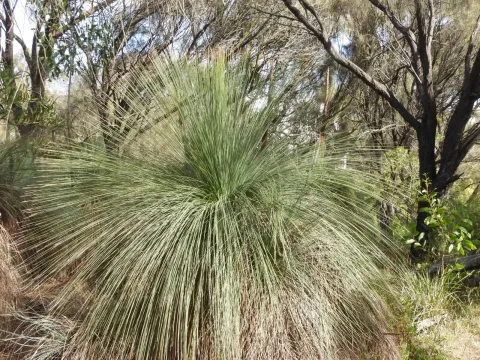
Southern grass tree
Xanthorrhoea australis
The Southern grass tree (Xanthorrhoea australis) is a member of the Xanthorrhoeaceae family, native to the temperate regions of southeastern Australia.
What the section contains
Southern grass tree
It is characterized by a thick, woody stem and a dense canopy of long, grass-like leaves, giving the plant its distinct appearance that resembles a primitive tree.
This species thrives in well-drained, nutrient-poor, sandy, or stony soils. It is highly sensitive to root disturbance and excessive soil moisture, which can cause rapid decay.
The plant requires full sun exposure to flourish. It is a slow-growing perennial that is remarkably fire-adapted in its natural habitat but requires care in managed agricultural settings.
Historically, the plant has been used for its resin, which was harvested by indigenous populations as an adhesive and sealing agent, showcasing its economic and cultural value.
Phytophthora root rot is the most serious threat to this species, often caused by waterlogged soil conditions and poor management of site drainage.
Mealybugs can be a persistent issue, clustering in the protected spaces between leaf bases where they are difficult to detect and eradicate without systemic treatment.
Fungal leaf spot diseases may appear if the air circulation around the canopy is poor, particularly in humid and cool environments that do not mimic the native climate.
Over-fertilization with phosphate-rich substances is lethal for this species, as it is adapted to low-nutrient soils and lacks the mechanisms to handle high mineral concentrations.
Prevention of pest outbreaks involves maintaining optimal plant health through natural ventilation, keeping the base clear of rotting debris, and ensuring the soil remains light.