
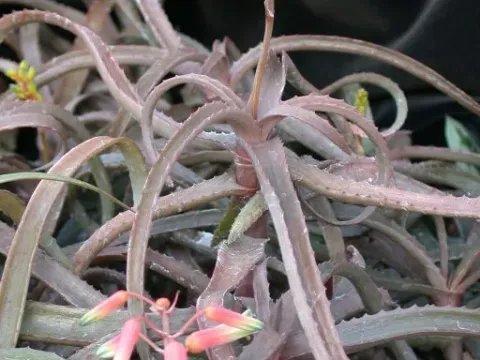
Aloe delphinensis
Aloe delphinensis
Aloe delphinensis is a distinct succulent species belonging to the Asphodelaceae family. This rare plant is native to a very restricted region in Madagascar, specifically near the town of Tolanaro, where it thrives on rocky slopes and exposed terrain.
What the section contains
Aloe delphinensis
The botanical architecture of this species involves a slow-growing woody stem topped with a cluster of long, slender, grey-green leaves. Its morphological adaptations are designed for high heat tolerance and water conservation in arid environments.
Optimal cultivation requires a gritty, well-draining substrate. Growers should utilize a mixture consisting of mineral components, such as pumice or coarse sand, to prevent any risk of moisture retention around the delicate root system.
Environmental conditions must prioritize high light exposure. In controlled environments, full sun or high-intensity LED supplemental lighting is required to maintain the compact shape of the rosette and prevent etiolation.
Temperature management is critical for this species. While it withstands high daytime temperatures well, it is not cold-hardy. Maintenance during the dormant period requires dry conditions and protection from frost to ensure the plant remains healthy for the next growth cycle.
The most significant threat to Aloe delphinensis in cultivation is root rot, which is almost exclusively caused by overwatering or poor drainage. Once roots succumb to rot, the infection quickly spreads to the stem, often resulting in total plant failure.
Common succulent pests, including mealybugs and spider mites, are frequent threats. These pests thrive in poorly ventilated environments and can quickly debilitate the plant by extracting sap from the succulent leaves.
Fungal infections, often manifesting as leaf spots or stem decay, arise when high humidity levels coincide with stagnant air. Maintaining proper spacing between plants and using small fans to facilitate airflow is a standard preventative agronomic practice.
If an infestation or fungal issue occurs, localized pruning of the affected tissue followed by a fungicidal application is necessary. It is crucial to allow any wounds to callous over before resuming a standard care routine.
Pest management should focus on non-invasive biological controls or insecticidal soaps before resorting to systemic pesticides, as sensitive succulent tissues can react poorly to harsh chemical treatments if the concentration is too high.