
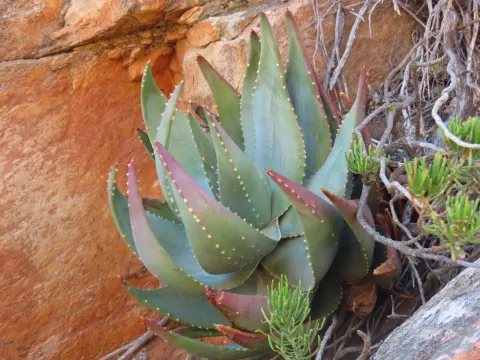
Aloe comptonii
Aloe comptonii
Aloe comptonii is a perennial succulent plant belonging to the Asphodelaceae family, native to the rocky landscapes of South Africa. It is characterized by its compact, stemless rosette shape and distinctive fleshy leaves that store water for survival.
What the section contains
Aloe comptonii
Successful cultivation requires a location with full, direct sunlight throughout the day. In regions with insufficient light, the plant will lose its structural integrity and its natural, compact habit, making it more prone to physical stress.
The substrate must be extremely well-draining, such as a mix of loam, coarse sand, and perlite. High porosity is essential to prevent moisture accumulation around the root collar, which is the primary cause of plant death in cultivation.
Watering practices should follow the seasonal cycle, with regular watering during the active growth phase and a significant reduction in winter. Always allow the substrate to dry out completely before applying more water.
Temperature management is crucial; while the plant can withstand slight temperature drops, it is sensitive to prolonged freezing conditions. It thrives in an environment with good air circulation, which helps manage humidity and prevents leaf rot.
The primary threats to Aloe comptonii are fungal pathogens, specifically those causing root and leaf rot triggered by excessive irrigation or inadequate drainage systems.
Insect pests such as mealybugs and spider mites are frequent invaders of succulent collections. These pests colonize the dense leaf rosettes, extracting sap and reducing the plant's overall vitality.
Early detection is the most effective management strategy. Gardeners should inspect the plant regularly, paying close attention to the tight center of the rosette where insects tend to hide.
In cases of infestation, systemic insecticides or mechanical cleaning with isopropyl alcohol are recommended. Isolation of infected plants is a critical step to prevent the spread to other specimens.
Proper hygiene, including the removal of dead leaves from the base, is a simple yet effective practice to minimize the risk of pests and fungi residing near the plant's growth point.