
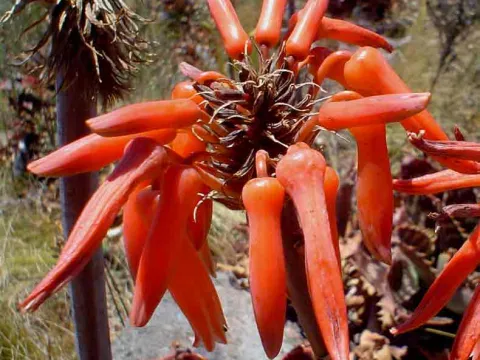
Aloe collina
Aloe collina
Aloe collina, a member of the Asphodelaceae family, is primarily propagated through seeds or offset division. For seed sowing, the most effective window is early spring when increasing daylight hours facilitate rapid seedling development.
What the section contains
Aloe collina
The substrate for germination must be a well-draining, sandy mixture with very low organic content. Seeds should be sown on the surface and lightly covered with fine grit or sand to ensure stable moisture around the seed coat during the initial stages of development.
Maintaining a temperature range of 22–25 degrees Celsius is critical for germination. Utilizing a heat mat can significantly reduce the time until emergence, which typically takes between two to three weeks under optimal conditions.
Once true leaves appear, seedlings should be moved to individual containers to prevent overcrowding. It is vital to manage water carefully, as young succulents are highly susceptible to dampening-off diseases if the soil remains saturated.
For vegetative propagation, offsets are removed from the parent plant during repotting. This method is preferred for commercial production as it results in genetically identical plants with already developed root systems, speeding up the production cycle.
As a native of arid environments, Aloe collina requires full sun to thrive. High light intensity is essential for the development of the thick, fleshy leaves and the accumulation of secondary metabolites, which are the main focus for commercial harvesting.
Soil composition must prioritize drainage; heavy or water-retaining soils are unsuitable and will lead to rapid root decay. A mixture of pumice, grit, and sandy loam is the standard for long-term healthy cultivation.
The ideal growing temperature ranges from 20 to 30 degrees Celsius. Aloe collina possesses remarkable drought tolerance, storing significant water reserves in its tissue to survive periods of limited rainfall.
During the winter months, a cool dormant period is necessary, with temperatures between 10 and 15 degrees Celsius. This rest phase is vital for the plant's health, ensuring it recovers energy for the upcoming growing season.
Low humidity is preferred to prevent the onset of fungal pathogens. Proper air circulation in greenhouses is a mandatory requirement to ensure the dry conditions that this species requires to stay healthy and productive.
The economic yield of Aloe collina is measured by the biomass of its leaves, which contain the valuable medicinal gel. Productivity is maximized through high light exposure and a precise watering schedule that mimics natural rain cycles.
Mature plants can reach a harvestable size within 2–3 years under controlled greenhouse conditions. Regular harvesting of the lower, older leaves stimulates the plant to continue producing new, healthy growth from the central rosette.
The biological quality of the yield is determined by the concentration of active compounds, including anthraquinones. Optimal nutrition and light management ensure high levels of these substances, making the crop viable for pharmaceutical use.
Well-managed plantations can remain productive for 5–7 years before needing rejuvenation. Efficient spacing in the rows is key to maintaining adequate air movement and preventing localized humidity issues.
Beyond leaf production, Aloe collina is increasingly valued in the ornamental market. Small to medium-sized specimens are popular among collectors, providing a secondary revenue stream for agricultural growers.
The primary threat to Aloe collina is root rot, typically caused by Fusarium and Phytophthora fungi. These infections are almost always the result of improper drainage and excessive soil moisture during cooler periods.
Mealybugs are the most common insect pests, often hiding in the crevices between leaves. They feed on plant sap and can severely stunt growth if left unchecked, often leading to secondary fungal issues.
Scale insects can also infest the leaf surfaces, forming hard shields that protect them from manual removal. These require systematic insecticide application or careful manual cleaning with alcohol-based solutions to remove.
Spider mites may become a problem in very dry and stagnant air conditions. Preventing these infestations involves regular monitoring and ensuring that the greenhouse environment does not become excessively dry.
Strict sanitation protocols, including the sterilization of tools and the quarantine of new plants, are essential to prevent the spread of diseases and pests throughout the agricultural plantation.
Harvesting is performed by carefully cutting the mature leaves at the base of the rosette. Using a sharp, sterilized blade ensures a clean cut that heals quickly, reducing the risk of pathogen entry into the succulent tissue.
Harvesting is best conducted during the early morning when the leaf water content is at its peak. It is crucial to leave enough leaves on the plant to ensure its continued survival and future production.
Post-harvest handling is critical, as the gel inside the leaves oxidizes rapidly when exposed to air. Leaves must be transported to the processing facility in sealed containers to preserve the integrity of the active ingredients.
Quality control begins at the harvest stage, with damaged or diseased leaves being discarded immediately. Only healthy, turgid leaves should be processed to ensure the highest quality of the final extract.
Automated extraction lines are becoming more common in larger operations. These systems cleanly separate the outer rind from the inner gel, maintaining high sanitary standards throughout the processing cycle.