
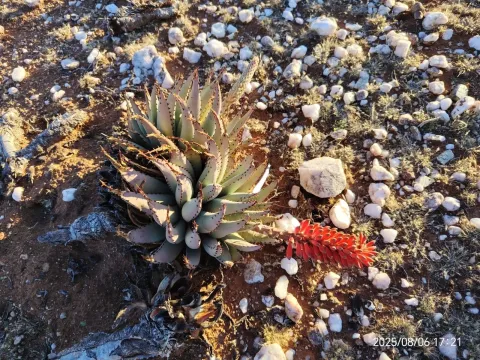
Aloe claviflora
Aloe claviflora
Aloe claviflora is a distinct succulent species belonging to the Asphodelaceae family. It is native to the arid regions of Southern Africa, thriving in rocky and sandy environments where rainfall is sparse and sporadic.
What the section contains
Aloe claviflora
The plant is characterized by its unique growth habit, where leaf rosettes gradually incline toward the sun. This morphology is an evolutionary adaptation that helps the plant survive in high-heat and low-moisture habitats.
To cultivate this species successfully, excellent soil drainage is mandatory. Using a grit-heavy or specialized cactus mix is essential to prevent moisture accumulation around the base of the plant, which is the primary cause of decline.
Light requirements are very high for Aloe claviflora. It requires full, direct sun to maintain its structural integrity and dense form. Providing sufficient light is the best way to prevent etiolation and ensure a robust immune system.
The climate requirements for this plant include warm temperatures and low humidity. It is sensitive to prolonged frost and freezing temperatures, which can damage the cellular structure of its succulent leaves.
The primary threat to Aloe claviflora is root rot caused by overwatering or poor soil drainage. Once the roots begin to decay due to fungal infections, saving the plant becomes exceptionally challenging.
Mealybugs are the most common pest associated with this plant. They typically colonize the areas between the leaves, where they remain shielded, making them difficult to detect until the infestation becomes significant.
Scale insects can also infest the epidermis of the leaves. By feeding on plant sap, they cause localized chlorosis and physical damage that serves as an entry point for opportunistic pathogens.
Spider mites are a potential threat in environments with low airflow and dry conditions. They leave visible webbing and can cause the plant to appear dull and dehydrated if left untreated.
Maintaining a clean growing space, ensuring proper spacing between plants, and adhering to a strict watering schedule are the best defenses against both diseases and insect pests.