
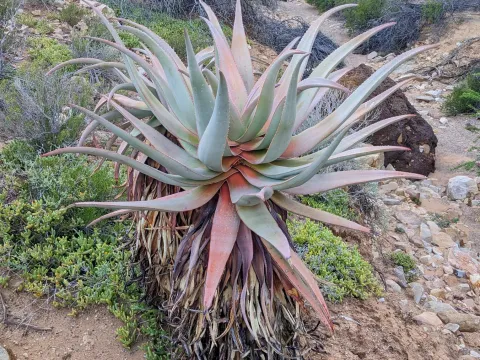
Aloe comosa
Aloe comosa
Aloe comosa is a striking arborescent succulent species belonging to the Asphodelaceae family. It is endemic to the arid regions of the Western Cape in South Africa, where it thrives in rocky terrain and nutrient-poor environments.
What the section contains
Aloe comosa
The botanical structure of this plant features a robust, solitary stem that can grow to impressive heights, topped with a dense rosette of long, slender leaves. It is highly valued by collectors for its unique architectural appearance and dramatic inflorescence.
Optimal soil conditions must mimic its natural habitat, requiring a gritty, highly porous medium with excellent drainage properties. A mix containing coarse sand, perlite, and a small amount of pumice is ideal for container cultivation.
As a sun-loving species, Aloe comosa requires exposure to intense, direct sunlight for several hours daily. In cultivation, failure to provide sufficient light will cause the plant to lose its compact form and weaken its structural integrity.
Irrigation must be handled with extreme care, following the soak-and-dry method. During the winter dormancy, the plant requires minimal to no water, as excessive humidity is the primary cause of sudden plant failure in this species.
The primary threat to Aloe comosa is root rot, triggered by overwatering or poorly draining substrate. Once the rot reaches the stem base, the plant becomes nearly impossible to rescue, making prevention the best defense.
Pests such as mealybugs represent a significant challenge, often hiding in the dense leaf rosettes where they are difficult to treat. Manual removal combined with systemic insecticidal applications is usually required to control infestations.
Scale insects can also infest the leaves, causing localized damage and potential susceptibility to secondary fungal infections. Regular inspection of the plant's surface is essential for identifying these pests before they spread.
High humidity and lack of air movement can encourage the development of fungal leaf spot diseases. Ensuring proper ventilation around the plant is crucial for maintaining a dry, healthy leaf surface.
Mechanical damage to the succulent leaves can provide entry points for pathogens. Always handle the plant with care during repotting to avoid wounding the foliage, which is sensitive to bruising and subsequent bacterial decay.