
Aloe capitata
Aloe capitata
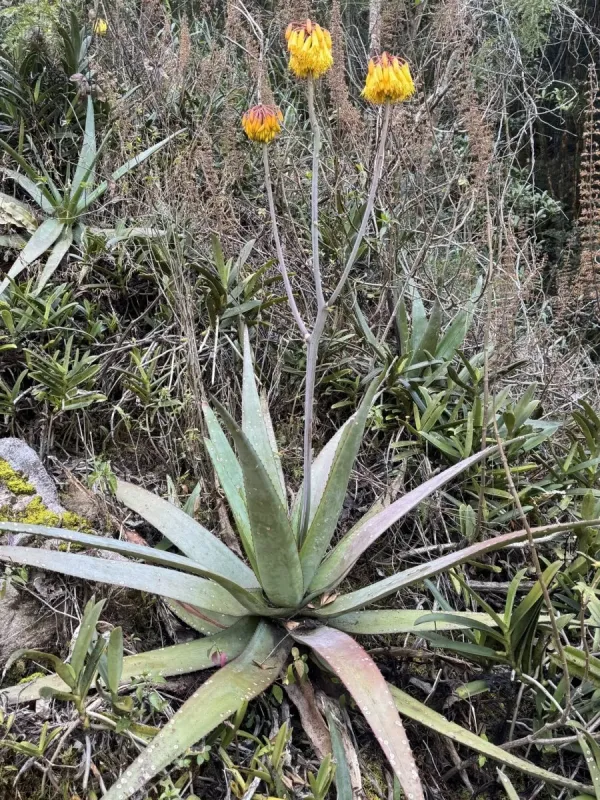
Description
Growing requirements
Aloe capitata is a perennial succulent species belonging to the Asphodelaceae family. It is native to the island of Madagascar, where it thrives in rocky, arid habitats at varying elevations.
The plant requires full sun exposure to maintain its characteristic rosette shape and vibrant leaf coloration. Insufficient light leads to etiolation, rendering the plant structurally weak and susceptible to disease.
Soil requirements for this species are specific: it mandates a highly porous, inorganic-based substrate. A mixture of pumice, coarse sand, and minimal potting soil is ideal to ensure rapid water drainage.
Regarding climate, Aloe capitata is strictly warm-climate adapted. It is intolerant of frost and requires stable, temperate conditions, typically managed within greenhouses in temperate latitudes.
The watering regime should follow the "soak and dry" principle. Growers must allow the substrate to desiccate completely between irrigation cycles to mimic the dry periods of its native environment.
Main diseases and pests
Root rot, primarily caused by Phytophthora or Pythium species, is the most common threat. This occurs when the roots are subjected to prolonged moisture in non-aerated potting media.
Mealybugs are the most prevalent pest affecting this succulent. They often hide in the tight crevices of the leaf rosettes, extracting sap and weakening the plant's structural integrity.
Scale insects can also infest the leaves, forming hard protective shells that are difficult to penetrate with standard topical treatments, necessitating systemic insecticides for effective control.
Fungal leaf spots may appear if humidity remains high without adequate air circulation. Increasing airflow via fans or proper spacing is essential to mitigate the risk of pathogen colonization.
Routine inspection of the root zone and leaf axils is crucial. If the plant shows signs of sudden wilting or discoloration, immediate repotting into fresh, dry medium is the recommended corrective action.