
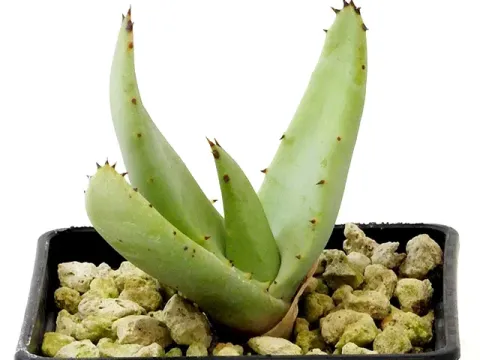
Aloe asperifolia
Aloe asperifolia
Aloe asperifolia is a perennial succulent plant belonging to the Asphodelaceae family. Native to the arid landscapes of Namibia, this species has evolved to thrive in harsh environments characterized by low precipitation and rocky, mineral-rich soils.
What the section contains
Aloe asperifolia
The plant is defined by its distinctive rosettes of fleshy, rough-textured leaves. Its surface is covered in small, whitish tubercles that give it a unique appearance while playing a functional role in reducing water loss through transpiration in extreme heat.
Successful cultivation requires full sun exposure and a highly porous, gritty soil mixture. Providing a high-quality drainage system is essential, as the roots are highly susceptible to rot if water is allowed to stagnate around them, even for short periods.
In terms of climate, Aloe asperifolia prefers constant warmth and bright conditions. It is not frost-tolerant and must be protected from temperatures near freezing, making it an ideal candidate for greenhouse cultivation or container gardening in temperate zones.
The primary use of this species is in decorative horticulture and specialized succulent collections. It is prized by botanical enthusiasts for its unique morphology, its slow growth habit, and its resilience once established in appropriate environmental conditions.
The most common threats to Aloe asperifolia are fungal diseases resulting from poor aeration and excessive soil moisture. Pests such as mealybugs or scale insects can occasionally infest the plant, particularly if kept in stagnant, humid environments without proper airflow.