
Aloe arenicola
Aloe arenicola
Description
Growing requirements
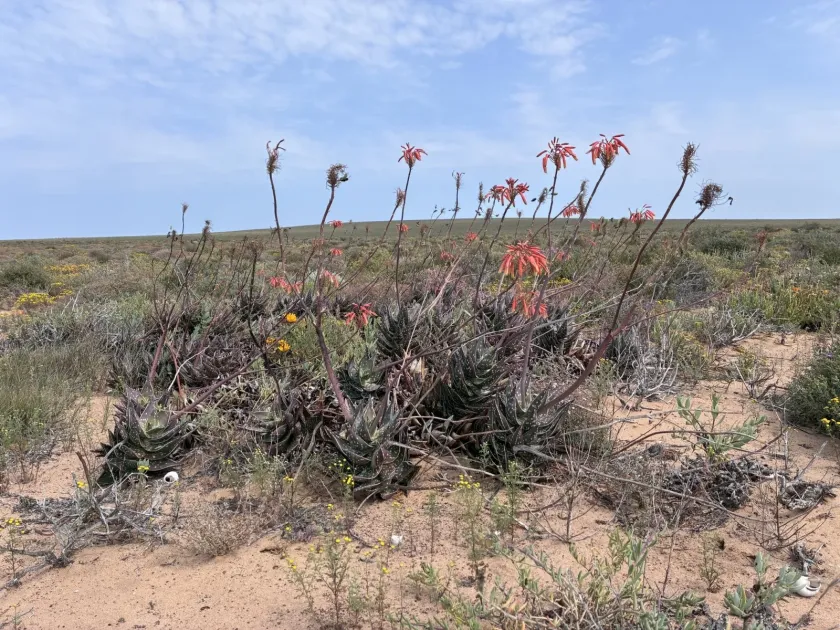
Aloe arenicola is a distinctive succulent species belonging to the Asphodelaceae family. Native to the sandy dunes of the Northern Cape in South Africa, it is perfectly adapted to arid coastal environments.
The plant grows in a sprawling, bushy manner with stems that can reach up to one meter in length. Its leaves are thick, fleshy, and marked with pale spots, forming dense rosettes at the tips of the branches.
To cultivate this species successfully, gardeners must prioritize drainage. A gritty, mineral-rich soil mix is essential to prevent moisture retention that leads to root asphyxiation and rot.
Light intensity is a critical factor for the structural integrity of Aloe arenicola. It thrives in full sun exposure, which ensures the leaves maintain their compact, spotted appearance and robust texture.
Watering requirements follow a strictly seasonal pattern; it should be watered thoroughly during the growth phase but kept almost completely dry throughout the dormant winter months to prevent physiological stress.
Main diseases and pests
Root rot remains the most significant threat to the survival of Aloe arenicola. It is often triggered by poor drainage or excessive watering, especially in environments with high ambient humidity.
Mealybugs are common pests that tend to hide in the tight rosettes of the leaves. Regular inspection and the application of suitable contact insecticides are necessary to control these infestations before they spread.
Spider mites can become a nuisance if the plant is kept in an area with stagnant, dry air. These mites cause stippling on the leaf surface, which can lead to permanent damage if left untreated.
Scale insects are another potential risk; they attach themselves to the stem and leaves, feeding on the plant's sap and weakening its natural immune response against fungal infections.
Prevention involves ensuring adequate airflow and maintaining strict sanitation practices around the pots or planting sites to minimize the risk of pathogen accumulation.