
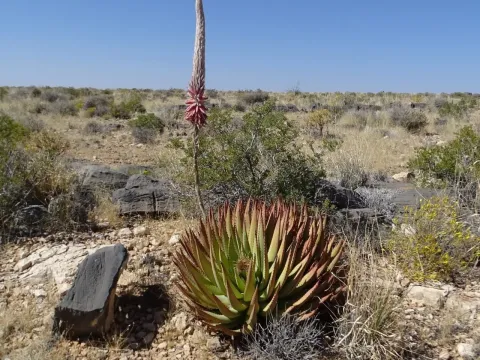
Aloe argenticauda
Aloe argenticauda
Propagating Aloe argenticauda is best achieved through seeds or offsets, following strict temperature controls between 22 and 26 degrees Celsius.
What the section contains
Aloe argenticauda
Seeds require a sterile, highly porous substrate consisting primarily of inorganic components like sand, grit, or perlite to facilitate drainage.
When using offsets, ensure that the cutting site forms a protective callus for several days before placing the pup into the planting medium.
Successful germination and rooting are most likely during the active growing season, which generally starts in late spring as light levels increase.
Proper spacing is essential for seedlings to ensure adequate airflow, preventing the development of damping-off diseases during the early stages of growth.
Aloe argenticauda belongs to the Asphodelaceae family and originates from the arid, rocky landscapes of Namibia, which defines its specific care needs.
The culture thrives in well-draining, mineral-rich soil mixes that mimic its native habitat's stony ground, preventing water retention in the root zone.
High intensity of natural light is crucial for this species; it requires a south-facing location to maintain its compact form and vibrant leaf health.
Irrigation must be strictly managed, following a "soak and dry" method where the soil is allowed to dry out completely between watering sessions.
During the winter months, the plant enters dormancy and should be kept in a cool, dry environment with minimal water to prevent etiolation.
Root rot is the most common threat to this species, usually caused by improper soil aeration and overwatering in stagnant conditions.
Mealybugs are frequent pests that infest the leaf axils, sucking the plant's sap and potentially spreading fungal spores across the foliage.
Spider mites can become problematic in low-humidity environments, manifesting as fine webbing and discoloration of the succulent leaves.
Early intervention with targeted systemic pesticides is recommended, although application should avoid direct saturation of the rosette center.
Maintaining a clean growing area and ensuring consistent air circulation are the most effective preventive measures against major pests and diseases.