
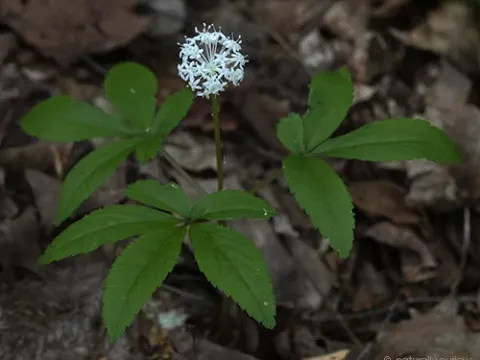
Dwarf ginseng
Panax trifolius
Panax trifolius, commonly known as Dwarf ginseng, is a perennial plant belonging to the Araliaceae family. It is a smaller relative of the more widely known Asian and American ginseng species.
What the section contains
Dwarf ginseng
Propagation is mainly achieved through seeds. In the wild, these seeds require a specific cold-moist stratification period to break dormancy, which mimics the winter conditions of the forest floor.
Sowing should be done in autumn in a well-drained, shaded nursery bed. The seeds are placed at a depth of about 1 centimeter and covered with organic mulch to prevent them from drying out.
Germination typically occurs in the early spring. As a slow-growing species, the seedlings require minimal disturbance and stable environmental conditions during their first years of life.
Proper density must be maintained to ensure each plant receives adequate nutrients and to minimize the spread of soil-borne pathogens across the planting bed.
Dwarf ginseng requires a woodland-like habitat to thrive. It naturally occurs in moist, deciduous forests where the soil is rich in leaf litter and organic matter.
The ideal soil is loose, well-draining, and slightly acidic. It is sensitive to waterlogging, which often leads to rapid decay of the small, tuberous roots.
Shade is non-negotiable for this species. In a domestic garden or farm setting, artificial shade cloth is usually required to protect the plants from direct sunlight, which causes physiological stress.
Climate requirements include moderate temperatures and high humidity. It is perfectly adapted to temperate zones where it experiences a distinct period of winter dormancy.
Regular maintenance involves checking for moisture levels and ensuring that the mulch layer is kept clean to avoid hosting harmful fungi or slugs.
Fungal pathogens are the most significant threat to Dwarf ginseng. Conditions such as Phytophthora or Pythium root rots can quickly destroy a population if drainage is insufficient.
Pests such as slugs, snails, and various beetle larvae can cause extensive damage to foliage and developing root systems. Integrated pest management is essential for healthy crops.
Overcrowding is a major risk factor. Providing sufficient spacing between plants allows for air circulation, which helps keep leaves dry and reduces the incidence of powdery mildew.
Weed control is also vital. Weeds compete for nutrients and moisture, and their removal must be done carefully by hand to avoid damaging the shallow root systems of the ginseng.
Biological controls and organic-based preventatives are preferred over chemical pesticides to preserve the purity of the medicinal root material.
The harvesting process for Panax trifolius is a long-term commitment. Roots are typically mature enough for harvest after at least five to seven years of steady growth.
Harvesting is conducted in the late autumn after the foliage has died back. This timing ensures that the plant has translocated its nutrients and chemical compounds into the root.
Using hand tools like forks, the soil is carefully loosened to lift the roots out without breaking them. Mechanical damage can lead to rapid oxidation and degradation of the active substances.
Once harvested, roots are cleaned of soil and debris, rinsed gently with cool water, and air-dried in a climate-controlled environment to prevent molding.
Properly cured roots should be stored in a cool, dry, and dark container to maintain their medicinal potency for future use in pharmaceutical or nutritional applications.