
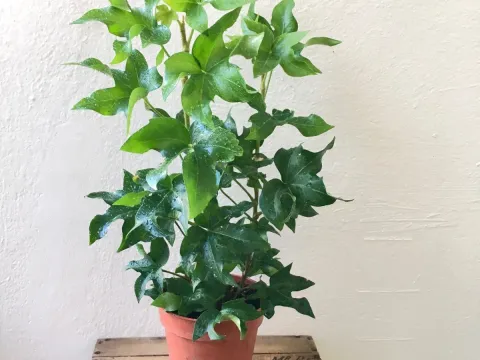
Fatshedera
Schefflera x Fatsia
Fatshedera (Schefflera x Fatsia) is a notable intergeneric hybrid plant belonging to the Araliaceae family. It was developed by crossing Fatsia japonica and Hedera helix, resulting in a unique evergreen shrub with vine-like properties and lobed leaves.
What the section contains

Fatshedera
The plant thrives in bright, indirect light conditions. Direct sunlight should be avoided as it causes leaf scorch, particularly on variegated varieties. A location with filtered light or partial shade is ideal for maintaining the plant's structural health and vibrant foliage color.
Soil requirements for Fatshedera include a well-draining, nutrient-rich, and slightly acidic potting mix. A standard indoor plant mix supplemented with perlite or coarse sand ensures that water drains freely, preventing the roots from sitting in stagnant water, which is critical for health.
Temperature management is vital; Fatshedera prefers cool to moderate conditions. Ideally, the plant should be kept at temperatures between 18°C and 22°C during the growing season. A cooler winter period, ideally around 10°C to 15°C, helps the plant remain dormant and vigorous.
Watering should be balanced: keep the soil consistently moist but never waterlogged. During winter months, watering frequency should be significantly reduced as the plant's metabolic activity slows down. Regular misting helps mimic the humid environment favored by this species.
Common pests that target Fatshedera include spider mites, scale insects, and mealybugs. These pests thrive in dry air conditions and can cause significant damage to the plant's foliage if not addressed promptly.
Fungal issues, particularly root rot, are the most common ailments resulting from overwatering or inadequate soil aeration. Dark spots on leaves or sudden yellowing can indicate a problem with the root system or poor drainage conditions.
Controlling infestations often requires both mechanical and chemical interventions. Using insecticidal soaps or neem oil is generally effective against soft-bodied insects, while pruning affected stems can help stop the spread of localized infections.
Prevention involves regular cleaning of the foliage to remove dust and debris. Maintaining good air circulation around the plant is an essential agronomic practice that significantly lowers the risk of fungal pathogens and pest outbreaks.
By ensuring that the pot has proper drainage holes and using a light, high-quality substrate, growers can effectively mitigate the risk of environmental stress, allowing the Fatshedera to maintain its decorative value for years.