
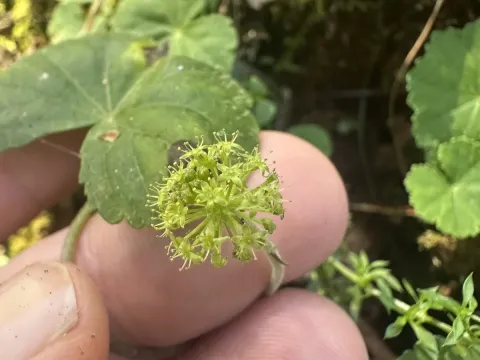
Mexican pennywort
Hydrocotyle mexicana
Mexican pennywort is a perennial herbaceous plant belonging to the Araliaceae family. It is native to the tropical and subtropical regions of Mexico and Central America, where it thrives in humid habitats.
What the section contains
Mexican pennywort
As a true hydrophyte, this crop requires constant access to water. It is typically grown in mud, wet soil, or shallow water bodies, making it a perfect candidate for hydroponic or wetland-based agricultural systems.
The botanical structure is characterized by creeping stems that root at the nodes, allowing for rapid colonization of an area. The leaves are peltate and rounded, providing a distinct aesthetic appeal and efficient photosynthetic surface area.
In terms of climate, Mexican pennywort is sensitive to frost and cold stress. Commercial production is most successful in controlled environments like greenhouses where temperatures can be maintained between 20°C and 25°C throughout the growing season.
The primary agricultural and economic uses include the ornamental trade for aquatic displays and garden ponds. Additionally, its high rate of growth makes it useful for phytoremediation, helping to extract excess nutrients from water sources.
The major threats to Mexican pennywort cultivation are fungal pathogens, specifically those causing root and stem rot. These occur primarily in stagnant water or when drainage is inadequate, leading to anaerobic conditions in the substrate.
Pests such as aphids and spider mites are common problems, especially in greenhouse environments where the air may become dry. These pests target the underside of the leaves, causing wilting and chlorosis.
Maintaining water quality is essential for preventing disease outbreaks. Regular circulation and filtration of the water can significantly reduce the risk of biological contamination.
Biological control methods, such as introducing predatory insects, are preferred over chemical treatments to ensure the safety of the plant, especially if it is intended for use in sensitive aquatic ecosystems.
Proper plant spacing is also crucial, as it ensures adequate airflow and light penetration, which helps to keep the foliage dry and healthy, thereby preventing the proliferation of fungal spores.