
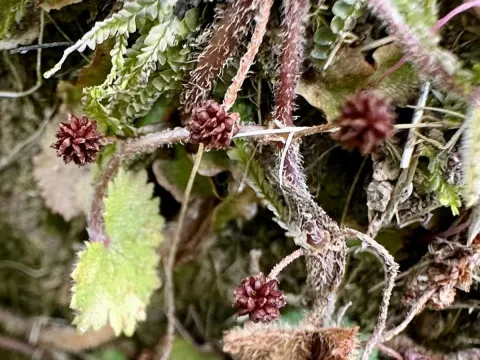
Musk pennywort
Hydrocotyle moschata
Musk pennywort, scientifically known as Hydrocotyle moschata, is a perennial herbaceous plant belonging to the Araliaceae family. It is native to the temperate and moist regions of New Zealand and parts of Australia.
What the section contains
Musk pennywort
The plant is defined by its creeping growth habit, featuring slender, branching stems that root at each node. This growth structure allows the plant to form dense, lush mats of kidney-shaped, scalloped foliage that spreads across the forest floor or damp garden soil.
The cultural requirements are centered around consistent soil moisture and high organic matter content. It thrives in well-drained, fertile soil that remains cool and slightly acidic, making it an excellent choice for shaded garden areas or terrariums.
Environmental conditions must mimic its natural habitat: moderate temperatures ranging between 15 and 22 degrees Celsius are ideal. While it is somewhat cold-hardy, extreme frost can damage the tender, fleshy stems and foliage during the winter season.
Horticultural use is primarily focused on landscaping. It is highly prized as a groundcover in damp, shaded spots where other grasses fail to thrive, and it is frequently used to soften the edges of water features or damp rockeries.
Fungal pathogens represent the most significant threat to the health of the plant. Root rot is particularly common in areas with stagnant water or poor air circulation, necessitating a careful balance of hydration and drainage.
Gastropods, including slugs and snails, are the most frequent pests observed on the plant. They find the tender foliage highly palatable and can significantly degrade the appearance of the dense mats within a few nights.
In indoor or greenhouse settings, spider mites can become an issue if the ambient humidity is too low. This usually happens during dry periods, where the lack of moisture stress makes the leaves more vulnerable to mite infestations.
Control strategies involve a combination of sanitation and manual removal of pests. Keeping the surrounding area clear of leaf litter reduces the hiding spots for slugs and improves overall hygiene for the plant colony.
Maintaining proper spacing between individual clumps or ensuring adequate ventilation is crucial to prevent the onset of mildew or other foliage-disfiguring diseases that thrive in damp, stagnant environments.