
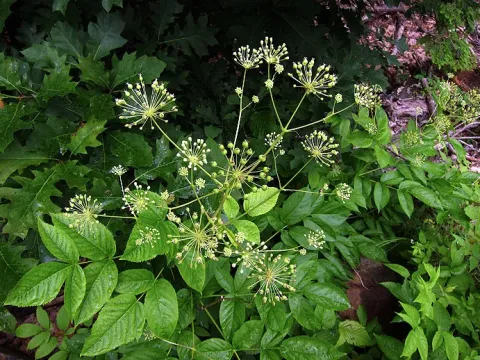
Bristly Sarsaparilla
Aralia hispida
Bristly Sarsaparilla (Aralia hispida) is a perennial subshrub belonging to the Araliaceae family. It is native to the northern regions of North America, where it thrives in rocky clearings, sandy soils, and open forest environments.
What the section contains
Bristly Sarsaparilla
For successful cultivation, the plant requires well-drained, fertile soil rich in organic matter. While it is adaptable to different soil textures, it shows the best growth performance in slightly acidic to neutral soil conditions with consistent moisture levels.
Regarding climate, Aralia hispida is extremely hardy and capable of surviving harsh winters. It is best suited for temperate climates where it can receive adequate moisture during the active growing season. It prefers sites that offer dappled shade rather than intense, direct sunlight.
Botanically, it is characterized by its distinctively bristly stems, from which it draws its common name. The leaves are large, compound, and bipinnate, creating a lush, tropical-like appearance. It produces small, white flowers that develop into clusters of dark purple berries.
In terms of utilization, Bristly Sarsaparilla is primarily cultivated as an ornamental plant for wild gardens or restoration projects. Its unique texture and structure make it an excellent choice for naturalistic landscaping and woodland garden settings.
The Bristly Sarsaparilla is generally robust, but it can be susceptible to soil-borne pathogens. Root rot is the most significant threat, which usually occurs when plants are placed in low-lying areas where water accumulates during the rainy season.
Foliage diseases, such as powdery mildew, may manifest if air circulation around the plant is restricted. Ensuring adequate spacing between individual plants is a critical preventive measure to maintain foliage health throughout the summer.
Common insect pests include aphids and spider mites. These pests tend to target the tender new growth during periods of heat stress, leading to stunted development and yellowing of the compound leaves if left unmanaged.
Management of these threats involves cultural practices such as regular site inspection and timely pruning. If infestation thresholds are crossed, horticultural soaps or targeted systemic insecticides may be applied during the early stages of the attack.
Maintaining high soil fertility and using mulch to keep the root zone cool and hydrated significantly improves the plant's resistance to environmental stress and opportunistic diseases. A proactive approach to garden hygiene is essential for long-term survival.