
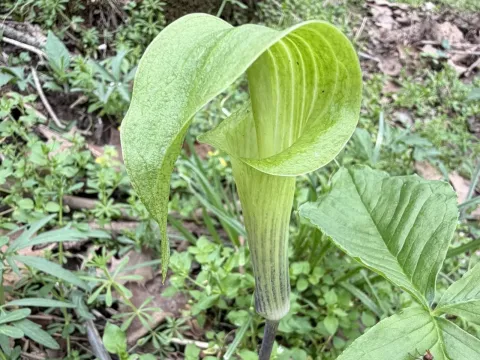
Jack-in-the-pulpit
Arisaema triphyllum
Jack-in-the-pulpit (Arisaema triphyllum) is a member of the Araceae family commonly propagated by seeds. For successful germination, seeds require a period of cold stratification, which can be achieved by sowing them outdoors in the autumn.
What the section contains
Jack-in-the-pulpit
Alternatively, the plant can be propagated by dividing the corms during the dormant season. This vegetative method is faster and ensures that the new plants inherit the specific characteristics of the parent specimen.
When sowing seeds, it is crucial to use a light, well-draining potting medium enriched with organic matter like leaf mold. This provides the necessary nutrients and physical environment for the delicate roots to develop.
The germination process can be slow and sporadic. Keeping the substrate consistently moist but not waterlogged is essential for the transition from seed to seedling during the early stages of growth.
Young plants typically require several years of vegetative growth before they reach maturity and produce their characteristic inflorescences. Patience and consistent care during these early years are key to successful establishment.
The species thrives in shaded or semi-shaded environments, mimicking its native habitat in North American woodland floors. Direct sunlight should be avoided to prevent scorching the foliage and reducing the plant's overall vitality.
Soil requirements are specific: the medium must be humus-rich, acidic to neutral, and possess excellent drainage. Poorly draining soils are the primary cause of corm rot, especially during the winter months.
Incorporating composted forest debris into the planting site improves soil structure and mimics natural woodland conditions. This enhances the availability of essential nutrients and supports healthy microbial activity in the root zone.
Moisture management is critical during the active growing season. The plant performs best in sites where soil moisture remains steady, as drought stress can force the plant into premature dormancy and weaken the corm for the following year.
For colder climates, mulching the soil surface is a recommended cultural practice. A layer of organic mulch protects the corms from extreme freeze-thaw cycles, ensuring better survival and more vigorous growth in the spring.
The most significant threats to Arisaema triphyllum are fungal pathogens that attack the corm in waterlogged conditions. Preventing root rot is the most important aspect of maintaining a healthy crop of these plants.
Slugs and snails are the most prevalent pests, often causing significant aesthetic and physical damage to the leaves during the early spring. Monitoring and the use of physical barriers are effective ways to manage these pests.
In greenhouse settings, plants may occasionally be attacked by aphids or spider mites. Regular inspections and early intervention with biological or chemical controls can prevent widespread damage to the collection.
Soil-borne insect larvae can damage the corms, creating wounds that invite secondary bacterial infections. Ensuring the planting site is well-drained and free from excessive debris helps mitigate these risks.
Overall disease management relies on good cultural hygiene, including the removal of infected plant tissue and ensuring adequate airflow around the planting area to prevent the buildup of humidity that favors fungal growth.