
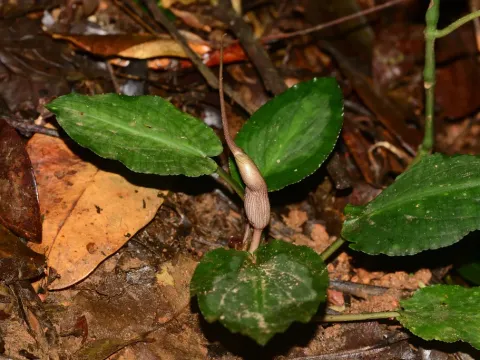
Lagenandra
Lagenandra
Lagenandra is a genus of perennial herbaceous plants belonging to the Araceae family. Originating from the tropical regions of South and Southeast Asia, particularly Sri Lanka and India, these plants naturally thrive in swampy areas, riverbanks, and marshy habitats where they are often submerged during monsoon seasons.
What the section contains


Lagenandra
Botanically, Lagenandra species are characterized by their creeping rhizomes and petiolate leaves, which display significant morphological variation between different species. Their growth habit is similar to that of Cryptocoryne, but they are generally more robust, featuring thicker, more leathery leaves that can adapt to both submersed and emersed conditions.
Optimal growth requires a stable tropical environment with temperatures consistently between 22 and 28 degrees Celsius. When grown submerged, the plants need stable water parameters; sudden shifts in pH or mineral composition can trigger a severe stress response, making consistency the most important element of their agronomy.
Soil requirements are centered on nutrient-rich, well-aerated substrates. In professional cultivation, the use of clay-enriched soils or commercial aquatic substrates is recommended to facilitate root development. Regular fertilization via the substrate is essential for maintaining vibrant leaf color and healthy growth rates.
The primary economic and practical use of Lagenandra is within the aquarium trade and botanical display industry. They are highly sought after for creating foreground to midground landscapes in aquascapes and are valued for their structural elegance and reliability in high-end public and private planted aquaria.
The most significant threat to Lagenandra is the physiological breakdown known as leaf melting. This phenomenon occurs when the plant is subjected to sudden changes in environmental conditions, such as light intensity or water quality, causing the leaf tissue to disintegrate rapidly.
Pest management involves regular inspection for mollusks, which are known to feed on the foliage. Additionally, in emersed setups, aphids and spider mites may become a concern. Integrated pest management using biological controls or mild organic soaps is advised, as these plants are often sensitive to heavy chemical applications.