
Helicodiceros
Helicodiceros
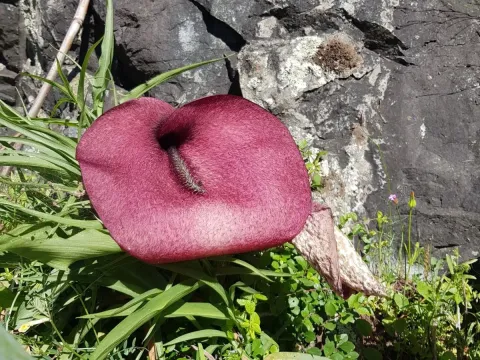
Helicodiceros muscivorus is a fascinating monotypic genus belonging to the Araceae family. Native to the Mediterranean islands of Corsica, Sardinia, and the Balearics, it is renowned for its unique, trap-like inflorescence designed to attract blowflies.
What the section contains

Helicodiceros
The plant thrives in rocky, well-draining substrates. In its natural habitat, it survives in thin soils, often tucked into crevices or among limestone rocks, where it can withstand the seasonal fluctuations of the Mediterranean climate.
Botanically, it features a large, dark-purple spathe that emits a scent of decaying matter. The foliage typically emerges in autumn and dies back completely as the summer heat sets in, marking the plant's entry into a necessary dormant phase.
For cultivation, provide a loose, porous medium that allows excellent aeration for the tubers. The key to success is mimicking its natural cycle: provide moisture when the leaves are active and maintain a dry environment during summer dormancy to prevent rot.
While not a standard agricultural crop, it is a prized specimen in botanical collections. Its use is strictly ornamental, often found in specialized gardens where its bizarre appearance and unique biological mechanisms can be studied and observed.
Fungal rots remain the primary threat to the tubers, usually caused by improper soil moisture levels. Ensuring the soil drains rapidly after irrigation is the most effective preventative measure against root-borne pathogens.
Pests such as aphids and spider mites may occasionally infest the foliage, particularly in greenhouse settings with restricted air circulation. Regular monitoring and maintaining proper humidity levels help mitigate these risks effectively.