
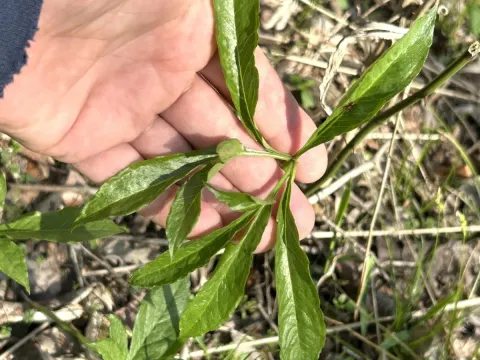
Green dragon
Arisaema dracontium
Propagation of Arisaema dracontium in cultivation is primarily achieved through seeds or vegetatively by dividing the tubers. Seeds should be sown outdoors in autumn or in containers, ensuring they receive a necessary period of cold stratification.
What the section contains
Green dragon
For vegetative propagation, offset tubers are separated from the mother plant during the dormant period when the above-ground parts have withered. The planting material must be healthy, free from rot and mechanical damage.
The planting depth for tubers ranges from 10 to 15 centimeters, depending on their size. It is crucial to maintain the correct orientation of the tuber to ensure the growth point is directed upwards.
To speed up germination, it is recommended to use fresh seeds as they lose viability rapidly if allowed to dry out. The optimal temperature for seed germination ranges between 15 and 20 degrees Celsius.
Rooting of young plants requires consistent moisture but without waterlogging, which can lead to the development of fungal infections in the root system.
The green dragon belongs to the Araceae family and originates from the forest ecosystems of North America. In cultivation, the plant requires partial shade or dappled light, as direct sunlight can burn its delicate leaves.
The plant has specific soil requirements: the medium should be loose, rich in organic matter, and maintain a slightly acidic to neutral pH. A high content of leaf mold is essential for vigorous growth.
This species is moisture-loving and sensitive to drought. Regular watering during the active growing season is a mandatory component of care, especially when grown in containers.
Temperature conditions should reflect a temperate climate. While the plant can tolerate winter frosts, it benefits from mulching the root zone with organic matter to protect the tubers from extreme freezing.
To ensure proper root aeration, regular shallow cultivation of the topsoil is recommended, taking care not to disturb the root system, which is typically located near the surface.
The main threats to Arisaema dracontium are various rots that develop under conditions of excessive soil moisture. Fungal infections can quickly destroy the tubers, leading to the collapse of the entire plant.
Among pests, slugs and snails are the most common, as they actively feed on the succulent leaves. Control measures include setting traps or using specialized molluscicide treatments.
Under greenhouse conditions or improper care, aphids may infest the plant. Systemic or contact insecticides are effective in managing aphid populations.
Nematodes also pose a serious threat by damaging the root system. Prevention includes using only sterilized substrates and practicing crop rotation when growing on a larger scale.
Regular inspections of the plants allow for the timely detection of infection foci, preventing the spread of diseases. Utilizing fungicides at early stages significantly reduces the risk of losing the planting stock.