
Jack-in-the-pulpit (Cobra lily)
Arisaema ringens
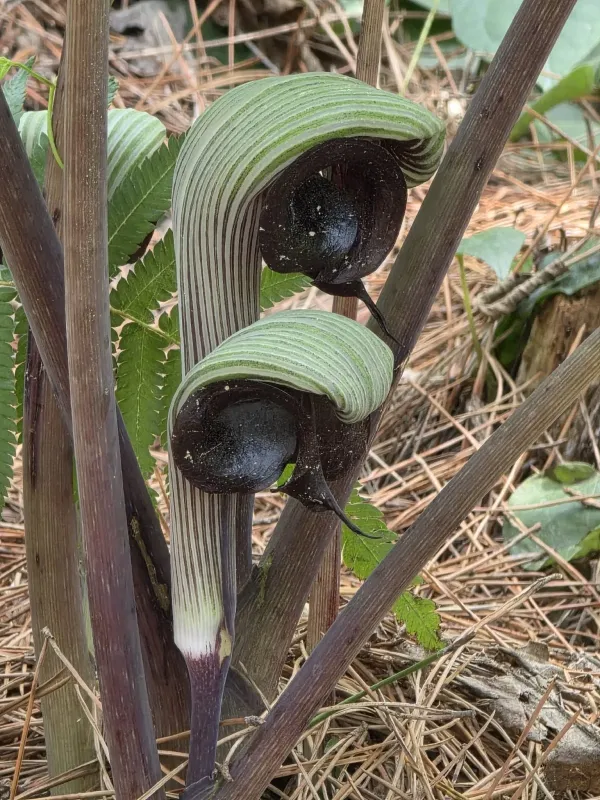
Description
Growing requirements
Arisaema ringens, commonly known as the Cobra lily, is a perennial flowering plant belonging to the Araceae family. Its natural habitat includes the temperate forests of Japan, Korea, and China, where it thrives in humus-rich, shaded forest floors.
Botanically, the plant grows from a large, fleshy tuber that produces distinctive trifoliate or palmately divided leaves. The inflorescence consists of a spadix sheltered by a striking, hooded spathe, which serves to protect the reproductive parts from excessive rainfall.
Successful cultivation requires soil that is rich in organic matter and maintains excellent drainage while retaining consistent moisture. Incorporating leaf mold or well-decomposed compost into the planting site mimics the plant's native forest environment.
The plant demands a shaded or semi-shaded location to prevent leaf scorch and soil dehydration. Proper placement is critical, as full sun exposure can lead to rapid senescence of the foliage during the peak of the growing season.
Climate adaptation involves managing dormancy during cold winter months. In areas where the ground freezes deeply, providing a thick layer of mulch helps insulate the tubers and ensures successful emergence in the following spring.
Main diseases and pests
The primary threat to Arisaema ringens is the development of fungal rot in the tubers, typically triggered by waterlogged soil conditions. Ensuring proper drainage is the most effective preventative measure against these soil-borne pathogens.
Aphids and spider mites are frequent pests, particularly in warmer, dry spells. Regular inspection and localized treatment with horticultural soaps or organic insecticides are recommended to maintain the aesthetic quality of the foliage.
Gastropods, such as slugs and snails, are highly attracted to the succulent growth of the plant. Using physical barriers like crushed shells or iron phosphate baits is an effective strategy to protect young shoots from severe herbivory.
Pathogen control should also include the careful inspection of tubers before planting. Discarding any soft or damaged material prevents the spread of rot within the planting bed, ensuring a healthy start for the season.
Monitoring for signs of stress, such as yellowing leaves or stunted growth, is essential for early intervention. Proper irrigation management is the backbone of plant health, significantly reducing the susceptibility to opportunistic diseases.