
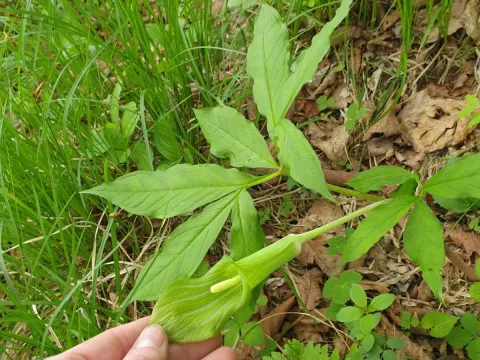
Amur cobra lily
Arisaema amurense
The Amur cobra lily (Arisaema amurense) is a perennial herbaceous plant belonging to the Araceae family. Characterized by its unique tuberous root system and distinctive spathe-and-spadix inflorescence, it originates from the temperate forests of the Russian Far East, China, and Korea.
What the section contains
Amur cobra lily
To cultivate this species successfully, gardeners must mimic its natural woodland habitat. It thrives best in partial to deep shade, as the foliage is highly sensitive to intense direct sunlight, which can lead to severe leaf scorch and dehydration during the peak summer months.
The ideal soil conditions require a rich, loose, and well-draining medium. Incorporating high levels of organic matter, such as leaf mold, compost, or peat, is essential to sustain the plant's nutrient needs while ensuring the moisture levels remain stable without allowing the soil to become waterlogged.
Proper agronomic practices include consistent watering during the growing season, particularly if rainfall is scarce. In colder climates, winter protection is critical; covering the tubers with a thick layer of organic mulch helps prevent damage from extreme frost and temperature fluctuations.
In terms of use, Arisaema amurense is primarily valued as an ornamental specimen for collectors of rare woodland perennials. Its exotic appearance makes it a standout feature in shade-loving plant displays, though it is not a commercial crop for food or fiber production.
The primary threats to Amur cobra lily are soil-borne fungal pathogens, such as root and tuber rot, which proliferate in poorly drained, soggy soil conditions. Improving soil aeration and limiting irrigation during wet periods are key preventative measures to keep the tubers healthy.
Slugs and snails are the most common pests, as they are attracted to the succulent foliage of the plant. Gardeners can manage these threats by using physical barriers like copper tape or crushed eggshells, or by applying non-toxic molluscicides around the base of the plant.
Aphids can occasionally infest the new growth, weakening the plant and potentially vectoring plant viruses. Regular monitoring is encouraged, and if an infestation is identified, mild insecticidal soaps can be applied to mitigate the damage without harming the plant's health.
Viral infections can result in stunted growth and mottled leaf patterns. Since there is no cure for systemic viral infections in Arisaema, the most effective management strategy is the immediate removal and disposal of any plants displaying symptomatic, irregular growth patterns.
Safety is a major consideration, as all parts of the plant contain calcium oxalate crystals, which can cause intense skin and mucosal irritation. Always wear protective gloves when handling the plants and keep them out of reach of children and pets to avoid accidental ingestion.