
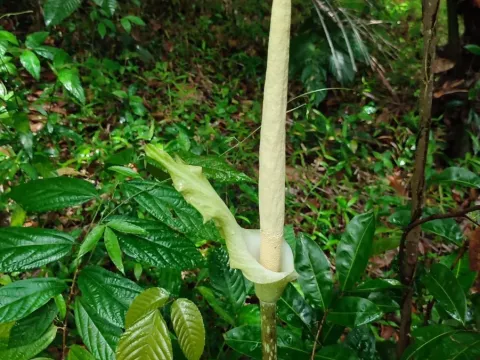
Amorphophallus variabilis
Amorphophallus variabilis
Amorphophallus variabilis is a perennial tropical plant belonging to the Araceae family. It is characterized by a large underground tuber that serves as a vital storage organ for carbohydrates, particularly glucomannan.
What the section contains
Amorphophallus variabilis
The plant is native to the tropical regions of Southeast Asia, primarily Indonesia and the Philippines. Its natural habitat includes humid forests and tropical clearings where soils are rich in organic matter and well-draining.
Successful cultivation of this crop requires a warm and humid environment, with optimal growth temperatures ranging between +25°C and +30°C. It is highly sensitive to cold and requires greenhouse protection in non-tropical climates.
The soil for Amorphophallus variabilis must be loose, porous, and nutrient-dense. Adequate drainage is mandatory to prevent waterlogging, as the tubers are highly susceptible to rot if left in saturated soil conditions.
The agricultural potential of this species is largely attributed to its starchy tubers. These are processed to extract glucomannan, a dietary fiber used in the food industry as a thickener and in health supplements.
The primary threats to Amorphophallus variabilis are fungal and bacterial rots caused by excessive soil moisture. Proper drainage and precise irrigation management are essential to protect the integrity of the tuber.
Pest pressure often involves spider mites and mealybugs, especially in indoor or greenhouse settings where air humidity may fluctuate. These pests can weaken the plant and reduce the tuber yield.
Root-knot nematodes can also pose a significant problem in field cultivation, attacking the root system and causing stunted growth. Soil sterilization and crop rotation are standard preventive measures.
Storage rot is a concern during the dormant period if the tubers are stored in conditions that are too humid or poorly ventilated. Maintaining cool, dry conditions is crucial for long-term storage success.
Farmers should implement integrated pest management (IPM) practices, emphasizing sanitation, proper spacing, and the use of healthy, disease-free planting material to maximize productivity.