
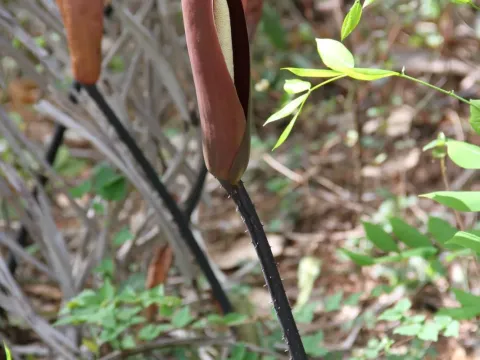
Anchomanes
Anchomanes
Anchomanes is a perennial herbaceous plant belonging to the Araceae family. Its biological cycle is strictly adapted to tropical rainfall patterns, which dictates the timing of planting activities for farmers.
What the section contains


Anchomanes
Planting typically occurs at the onset of the rainy season when soil moisture levels are optimal for rooting. Tubers are planted at a depth of 10–15 cm to protect them from surface heat while ensuring sufficient aeration.
The plant undergoes a significant dormant period during the dry season. During this time, the above-ground parts wither, and the plant focuses its metabolic energy on storing carbohydrates within its large underground tuber.
Vegetative propagation via daughter tubers is the standard agronomic method for this crop. This ensures genetic uniformity and faster development compared to the slow process of growing from seeds.
Farmers usually space plants about 50–70 cm apart to allow for the expansion of the large, umbrella-like leaves that the plant develops upon emerging from dormancy.
Anchomanes thrives in loose, well-draining soils rich in organic matter. Loamy soil textures with a pH between 5.5 and 6.5 are ideal for maximizing tuber size and quality.
The crop prefers locations with dappled or diffused sunlight. While it can tolerate deeper shade, consistent, moderate light exposure is necessary to support the energy requirements of the tuber development.
Consistent moisture is required during the growth phase, but the soil must never remain waterlogged. High drainage capacity is non-negotiable to prevent tuber rot during the rainy months.
Organic fertilization is highly recommended for this crop. The application of compost or green manure helps maintain soil structure and provides the necessary micronutrients for healthy growth.
Protection from strong winds is advisable to maintain the integrity of the foliage. Large, compound leaves are susceptible to tearing, which could prematurely reduce the plant's photosynthetic capacity.
The primary agricultural interest in Anchomanes lies in its starch-rich tubers, which serve as a fallback food source in many traditional farming systems in West Africa.
Tubers are known to be dense in carbohydrates, but they require proper preparation, such as thorough cooking or soaking, to eliminate naturally occurring compounds that can cause irritation.
Beyond food security, certain species of Anchomanes are valued in local ethnobotanical practices for their secondary metabolites, which are used in various herbal remedies.
Yield varies significantly based on the length of the growing season. Plants left in the ground for longer periods generally produce larger tubers, though farmers must monitor for potential fiber accumulation.
Market potential for this crop is currently niche, but it remains a staple for smallholder farmers who prioritize resilient, low-input crops suited to tropical ecosystems.
Tuber rot is the most significant threat to this crop. It is typically caused by soil-borne pathogens that exploit wet, anaerobic conditions if the field drainage is inadequate.
Aphids and thrips are common pests that feed on the foliage. Their feeding not only stresses the plant but also facilitates the transmission of viruses that can stunt growth and affect tuber development.
Nematodes are another major pest that targets the root system. Infestation leads to reduced nutrient uptake and creates entry points for secondary bacterial infections within the tubers.
Fungal diseases like leaf spot may occur if air circulation is restricted. Managing plant density and removing infected leaves are essential steps for disease control in the field.
Proactive management involves practicing crop rotation and ensuring that planting materials are free from visible signs of decay or damage before they are introduced into the soil.
Harvesting takes place once the foliage has turned yellow and died back naturally, signaling that the plant has entered dormancy and that the tuber is fully mature.
Tubers are unearthed carefully using mechanical tools, ensuring minimal skin damage. Any deep cuts or abrasions significantly increase the risk of decay during storage.
Post-harvest, the tubers should be cleaned of excess soil and allowed to cure in a shaded, ventilated area for a few days to harden their outer skin and improve durability.
Storage must be in a cool, dry place. Proper ventilation is critical to prevent the accumulation of moisture and the premature breaking of dormancy during the off-season.
Selection of the best tubers for the next planting season is a standard practice among growers, which helps maintain the quality and productivity of the crop over successive years.