
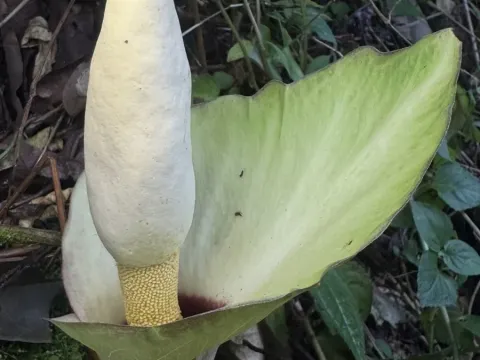
Amorphophallus prainii
Amorphophallus prainii
Amorphophallus prainii is a perennial tuberous plant belonging to the Araceae family. Native to the tropical regions of Southeast Asia, this species typically thrives in shaded forest understories, benefiting from high humidity and consistent warmth.
What the section contains
Amorphophallus prainii
Botanically, it is distinguished by a singular large, dissected leaf that emerges from a dormant subterranean tuber. The plant follows a strict seasonal cycle, alternating between a vegetative growth phase and a mandatory period of dormancy that is essential for its survival.
Successful cultivation requires a stable temperature range between 22°C and 28°C. The plant should be protected from direct, intense sunlight, which can cause significant damage to the leaf tissue and lead to dehydration.
The growing medium must be porous and rich in organic matter to mimic the natural forest floor. Using a well-draining substrate composed of peat, bark, and perlite helps prevent waterlogging, which is critical for maintaining healthy tuber development.
The primary utility of Amorphophallus prainii lies in botanical research and specialized ornamental gardening. It is highly prized by collectors for its architectural beauty and the uniqueness of its growth cycle, often featured in professional conservatory displays.
The most common agricultural threats involve fungal infections and soft rot, which primarily occur if the tuber is kept in overly damp soil during its dormancy phase. Ensuring proper ventilation and a strictly dry storage period is vital.
Pest pressures often involve infestations of spider mites or mealybugs, especially in indoor environments with low ambient humidity. Integrated pest management, including regular sanitation and targeted acaricide application, is recommended to protect the foliage.