
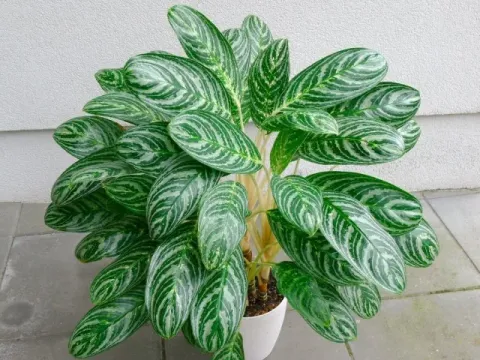
Aglaonema costatum
Aglaonema costatum N. E. Br.
Aglaonema costatum, commonly known as the spotted evergreen, is a member of the Araceae family. Originating from the tropical rainforests of Southeast Asia, specifically regions like Malaysia and Vietnam, it is a highly prized ornamental plant for its foliage.
What the section contains
Aglaonema costatum
The plant features short stems and broad, leathery, ovate-lanceolate leaves. Its most distinctive characteristic is the white central midrib and the scattering of white spots across the dark green leaf surface, which gives it a sophisticated appearance.
Regarding climate requirements, this species thrives in warm, humid environments. It requires temperatures consistently between 20 and 25 degrees Celsius. It is sensitive to extreme cold and must be protected from drafts, which can cause significant physiological stress.
For soil health, the medium must be well-drained and slightly acidic. A mixture of peat, perlite, and bark is ideal, as it allows roots to breathe while maintaining sufficient moisture levels. The plant requires moderate watering, allowing the top layer of soil to dry out before the next irrigation.
In terms of agricultural and horticultural use, Aglaonema costatum serves primarily as an indoor decorative crop. It is popular in professional landscaping and domestic interiors due to its slow-growing habit and ability to tolerate lower light conditions compared to other decorative species.
The primary pests affecting this crop include spider mites, mealybugs, and scale insects. These pests often congregate in the leaf axils, feeding on plant sap. Regular inspections and wiping leaves with a damp cloth are recommended as preventative control measures.
Fungal pathogens such as Pythium and Phytophthora are the main threats to the root system. These often occur when the growing medium remains waterlogged for extended periods. Maintaining good air circulation and using sterile substrates significantly reduces the incidence of these diseases.