
Aglaonema commutatum
Aglaonema commutatum Schott
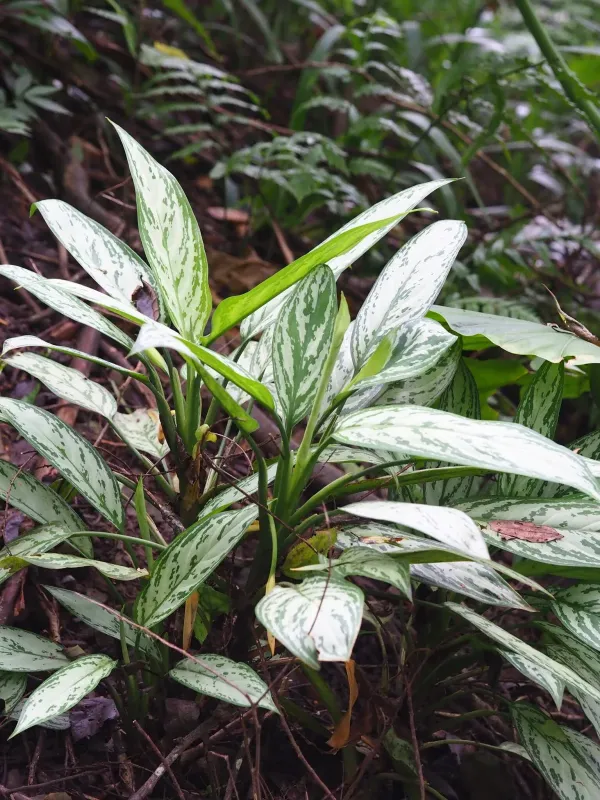
Description
Growing requirements
Aglaonema commutatum, belonging to the Araceae family, is a herbaceous perennial native to the tropical rainforests of the Philippines and Sulawesi. As a shade-loving species, it thrives in environments that mimic the diffused light conditions of its natural forest floor habitat.
The botanical structure of the plant features fleshy stems and lanceolate, often variegated leaves that grow in a rosette pattern. Its unique ability to remain productive under low-light intensities makes it a staple for commercial indoor plant production and corporate landscaping solutions.
Optimal growth is achieved at temperatures between 20°C and 25°C. The species is highly sensitive to cold stress; temperatures below 15°C can cause severe physiological damage, leading to leaf discoloration and a complete cessation of root development in colder months.
Cultivation requires a well-draining, slightly acidic substrate with a pH of 5.5 to 6.5. A mixture of peat moss, perlite, and coarse sand provides the necessary aeration and moisture retention needed to prevent root asphyxiation, which is the most common cause of crop failure.
In addition to its aesthetic value, Aglaonema commutatum is recognized for its air-purifying capabilities, filtering airborne pollutants like formaldehyde and benzene. This dual function as a decorative element and a natural air cleaner increases its market value significantly.
Main diseases and pests
Pests represent a significant challenge in greenhouse production, with mealybugs and spider mites being the most frequent threats. High humidity and poor airflow create ideal conditions for these pests, necessitating regular monitoring and integrated pest management strategies.
Bacterial leaf spot, often identified by water-soaked lesions, is a primary disease concern. Prevention focuses on minimizing overhead watering and ensuring that leaf surfaces remain dry, as moisture droplets facilitate the rapid spread of bacterial pathogens throughout the crop.
Root rot, typically caused by Pythium or Phytophthora species, is often linked to over-irrigation. Maintaining a strictly controlled watering schedule and using high-quality drainage systems is essential to protect the root health of the crop during the growth cycle.
Nutritional deficiencies often manifest as interveinal chlorosis, which can be mitigated through the application of balanced liquid fertilizers. It is important to monitor the substrate conductivity to ensure that salt accumulation does not inhibit nutrient uptake by the roots.
- Regular inspection for spider mites under leaves.
- Maintaining relative humidity between 60% and 70%.
- Sterilizing equipment between planting batches.
- Application of specialized fungicide treatments during high-risk seasons.