
Aglaonema crispum
Aglaonema crispum (Pitcher & R. F. Manda) Nicolson
Description
Growing requirements
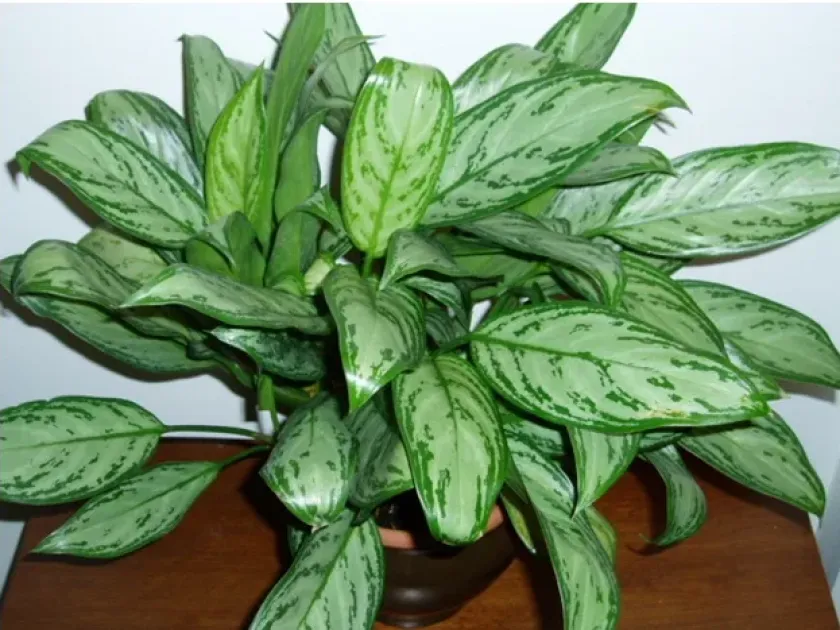
Aglaonema crispum is a perennial evergreen shrub belonging to the Araceae family. Originating from the tropical rainforests of Southeast Asia, particularly the Philippines, it is a highly valued ornamental plant known for its striking silver-variegated foliage.
The botanical structure of the plant features ovate-lanceolate leaves with a leathery texture and prominent veins. The plant is prized in the horticultural industry for its adaptability and ability to thrive in interior environments with moderate light levels.
The climate requirements for Aglaonema crispum include consistent temperatures between 20 and 25 degrees Celsius. It is sensitive to cold drafts and temperatures below 15 degrees Celsius, which can cause significant tissue damage to the leaves.
Regarding soil, the plant requires a well-aerated, peat-based growing medium. A mixture of perlite, peat moss, and pine bark is often used to ensure adequate drainage and to prevent the compaction of the root system over time.
Agrotechnical care involves maintaining high humidity levels and avoiding chemical imbalances in the soil. The plant is considered slow-growing, requiring minimal pruning, although dead or damaged leaves should be removed to maintain plant hygiene.
Main diseases and pests
Common pests affecting Aglaonema crispum include mealybugs, spider mites, and scale insects. These pests often congregate on the underside of the leaves or in the leaf axils, requiring mechanical cleaning or the application of horticultural oils.
Diseases are typically related to moisture control, with root rot (Pythium) being the most prevalent. Symptoms include yellowing of the lower leaves and wilting despite damp soil, indicating that the root system has lost its ability to absorb water.