
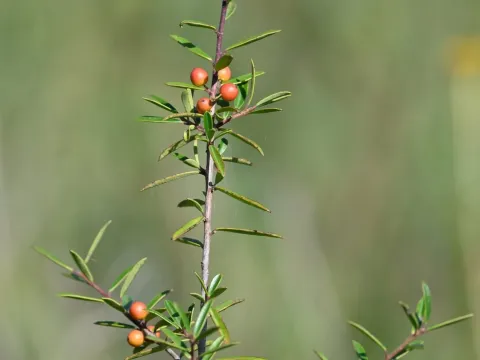
Myrtle-leaved holly
Ilex myrtifolia
The Myrtle-leaved holly (Ilex myrtifolia) is an evergreen shrub or small tree belonging to the Aquifoliaceae family. Native to the southeastern United States, it is primarily found in wetland habitats, including bogs, baygalls, and along riverbanks, showcasing its affinity for high-moisture environments.
What the section contains
Myrtle-leaved holly
This species is morphologically distinct due to its narrow, myrtle-like leaves which give it a delicate appearance compared to other broader-leafed holly varieties. Being dioecious, both male and female plants must be present in the landscape to ensure the successful production of bright red berries.
The cultural requirements dictate acidic or slightly acidic soil conditions with excellent drainage capabilities. While the plant can tolerate seasonal flooding, it performs best in soils rich in organic matter that maintain consistent moisture without becoming waterlogged for extended durations.
Regarding climate, Myrtle-leaved holly is adapted to zones 7 through 9, requiring temperate winters. It thrives in locations receiving full sun to partial shade, where sufficient light exposure is essential to maintain the density of the foliage and promote the vibrant color of its fruit.
In terms of practical application, this plant is highly valued for ornamental purposes in gardens and naturalistic landscaping. It is frequently utilized for hedging, mass plantings, or as a focal point due to its persistent winter fruit and glossy, year-round foliage.
Leaf spot diseases are common concerns for this holly, particularly in humid climates where poor air circulation encourages fungal growth. Regular pruning and maintenance of open canopy structures are essential to reduce humidity levels around the foliage.
Pests such as scale insects and mealybugs can infest the branches, sucking sap and causing dieback. Proactive monitoring and the application of horticultural oils or systemic insecticides are effective measures to control these pest populations before they cause significant damage.
Root rot, often caused by waterlogged soil, can severely impact the health of the plant. Ensuring the site has proper soil structure and organic drainage components is vital to preventing the development of anaerobic conditions that lead to root decline.
Aphids are frequent visitors during the spring flush of growth, potentially leading to the development of sooty mold. Controlling the aphid population early in the season is a critical step to keeping the leaves clean and maintaining the aesthetic value of the plant.
Nematode infestations can occur in sandy soils, which are typical of its natural range, causing stunted growth and nutrient uptake issues. Proper soil preparation and maintaining the plant's overall vigor are the best defensive strategies against these microscopic soil-borne threats.