
Smooth winterberry
Ilex laevigata
Description
Growing requirements
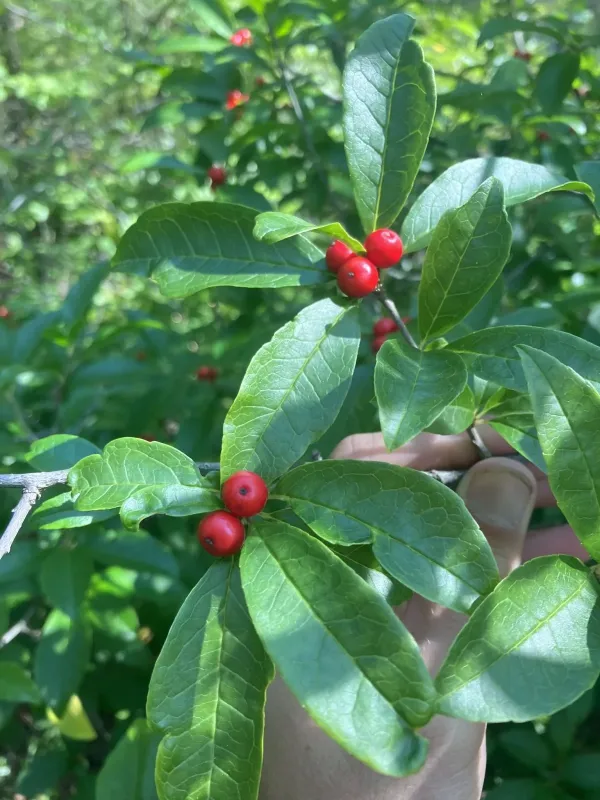
The Smooth winterberry (Ilex laevigata) is a deciduous shrub species within the Holly family (Aquifoliaceae). Unlike many of its evergreen relatives, this specific variety loses its foliage during the winter season, which provides a distinct visual shift in landscape aesthetics.
Native to eastern North America, the plant naturally inhabits swampy grounds, wetland edges, and low-lying areas. It thrives in soils that remain consistently moist, acidic, and rich in organic matter, reflecting its indigenous environmental preferences.
Successful cultivation requires selecting sites with full sun to partial shade exposure. Because the species is dioecious, gardeners must plant both male and female specimens in close proximity to ensure successful pollination and the subsequent development of its characteristic bright berries.
The plant is noted for its high cold hardiness, making it an excellent choice for various temperate climate landscapes. It is valued for its smooth, glossy leaves that turn vibrant yellow in the autumn, contributing significant seasonal interest to gardens and arboretums.
In terms of practical use, the Smooth winterberry is widely utilized in landscape design for water gardens, naturalized plantings, and shrub borders. Its ability to hold bright fruits deep into the winter makes it a highly desirable plant for year-round ornamental garden planning.
Main diseases and pests
The Smooth winterberry is generally resistant to many common garden diseases, though poor air circulation may lead to the development of powdery mildew or various leaf spots. Proper pruning and spacing are essential cultural practices to mitigate these fungal risks.
Pests such as scale insects and aphids occasionally infest the young growth of the shrub. Vigilant monitoring during the growing season allows for early detection and targeted intervention, which is necessary to prevent significant damage to the plant's ornamental foliage.
Root rot is a potential threat if the soil remains waterlogged without adequate drainage. While the species enjoys moisture, it requires soil with sufficient porosity to prevent the stagnation that encourages pathogenic fungi and anaerobic conditions in the root zone.
Applying an organic mulch layer helps regulate soil temperature and moisture levels, fostering a healthier root system that is more resilient to environmental stresses. Well-nourished plants consistently demonstrate better resistance to common landscape pests and infections.
Careful site selection, specifically avoiding areas with a history of soil-borne nematodes, is vital for long-term health. By maintaining balanced soil pH and preventing physical damage to the trunk, owners ensure the longevity and robust health of the Smooth winterberry.